


Nonvolatile photonic field-programmable coupler array
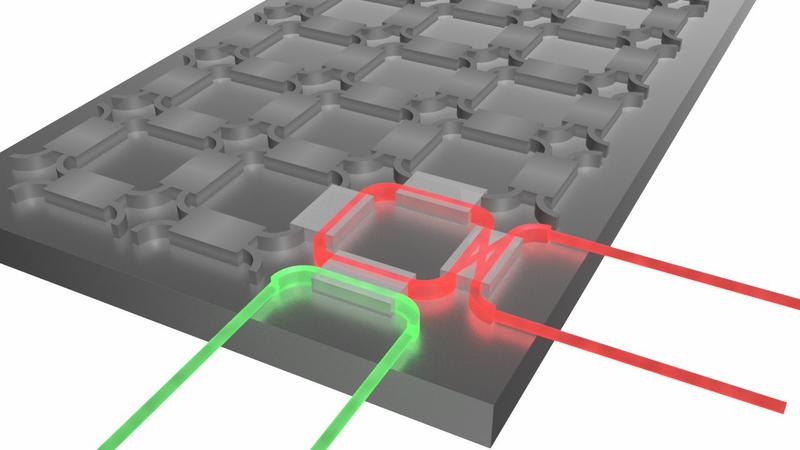
'This technology lets reprogrammable light-based circuits remember their settings without using any power, potentially changing the fundamentals of how we build energy-efficient computing and communication systems. Instead of constantly feeding electricity just to keep systems running, we can set them once and let them operate passively'.
Professor Harish Bhaskaran
A team of researchers from the Advanced Nanoscale Engineering Lab, led by Professor Harish Bhaskaran from this department, have built a reprogrammable photonic circuit with small-footprint building blocks (more than 15 times smaller than the current state-of-the-art of competing technologies (<10 µm)) with zero-static-power element that can route and manipulate optical signals on-chip.
Currently, each photonic application needs its own custom-built chip, which is slow and expensive to develop. A reprogrammable photonic chip will enable researchers and engineers to reconfigure the same piece of hardware for completely different tasks, dramatically cutting the cost and time for developing new technologies in AI, communications, medical sensing, and quantum computing. Not only that - because these chips process information using light rather than electricity, and can hold their configuration without constantly burning power, they could dramatically reduce the energy consumed by the data centres and AI systems that are increasingly central to modern life.

