


Professor Robert House: new Green Future Fellow
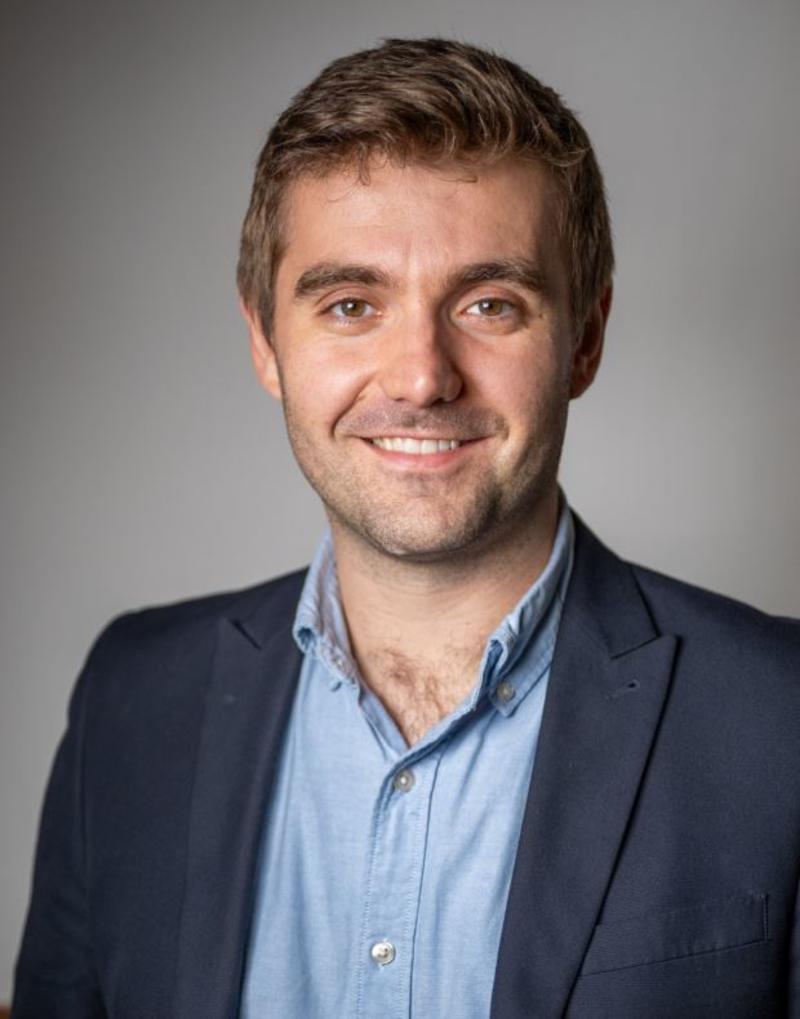
Image by Robert Spanring
"The Royal Academy of Engineering's Green Future Fellowships provide academics, entrepreneurs, innovators and engineers the space and time to transform their cutting-edge ideas into scalable, commercially viable, technologies to secure a greener, fairer, future"
Dr Hayaatun Sillem CBE, CEO of the Royal Academy of Engineering
The Royal Academy of Engineering has awarded £39M to the first ever Green Future Fellows, funded by a £150M long-term investment from the Department for Science, Innovation and Technology. The research work to be carried out will be located in the UK, although the solutions the Fellows develop will be of global significance. Numbering 13 Fellows in total, this first cohort will each receive £3M to develop solutions to tackle a variety of causes of the climate crisis, and to mitigate and adapt to its impacts. At least 50 Green Future Fellows will be appointed over five years. Successful applicants become a Green Future Fellow for the 10-year award duration, receiving up to £3M alongside non-financial support, such as training, mentorship, access to the Academy's network of exceptional innovators, and additional tailored support.
Professor Robert House of this department is one of the 13 inaugural Fellows who are taking up the challenge. Professor House will use his funding to develop a new type of battery that is four times more energy dense than current lithium-ion (Li-ion) batteries, thereby making them much lighter and powerful - and suitable for use in electric or hybrid aeroplanes.
Using nanoengineering, the new battery will overcome the challenges presented by their Li-ion counterparts which carry a lot of excess unused weight in the electrode materials. Increasing the practical energy density four-fold will mean that batteries will be made much smaller and lighter, which could help electrify air travel. As Professor House says:
"I am tremendously grateful to the Academy for their support and for sharing my vision of a green future for the aviation industry through electrification. Aviation is one of the hardest sectors to decarbonise and there are currently very few viable alternatives to kerosene which accounts for 99.8% of the energy consumed. Current battery technology is too large and too heavy to power commercial domestic or long-haul aircraft.
The long-term Green Future Fellowship funding will allow me to launch an ambitious new research programme to develop novel battery concepts to meet the stringent performance and safety requirements for aerospace. This high-risk, high-reward research could transform the way we travel by air by making aeroplanes quieter and less polluting at airports, reducing their greenhouse gas emissions in the high atmosphere, and increasing the range of electric flying taxis. The technology could also have a wider impact on EVs as well as heavy goods, construction and mining vehicles, improving their power and driving range.
I am looking forward to the challenges that lie ahead and welcome interest from talented, motivated students and researchers who want to help make this a reality".

