


Impact of binder content on particle fracture & electrodes for Li-ion batteries
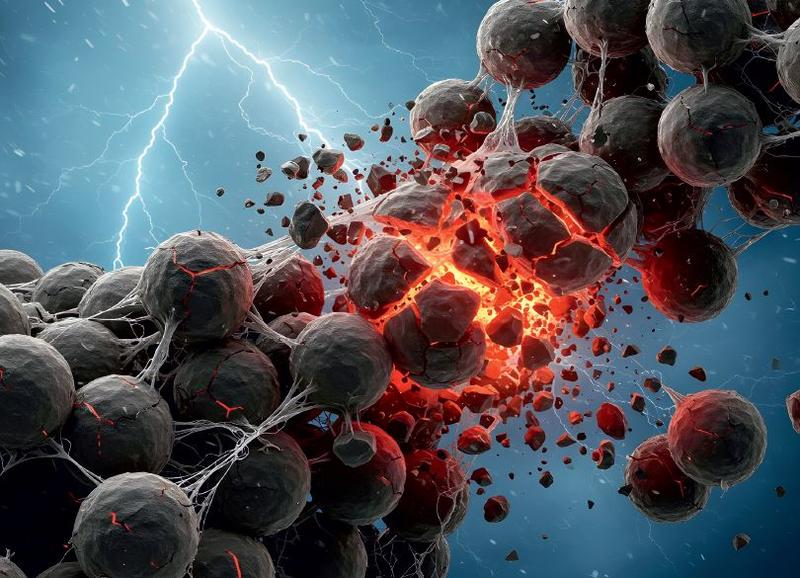
Solvent-free electrodes, also known as dry-processed electrodes, have a unique microstructure composed of active material particles held together by a web-like network of PTFE nano-fibrils.
The fraction of binder in these electrodes has a dramatic impact on their processability and mechanical properties, ultimately controlling their microstructure and electrochemical performance.
The origin of particle fracture was linked to the viscoelastic response of the electrode during compression, with lower binder content leading to higher electrode ductility and a reduction of active material fracture during the manufacturing process.
The image for this paper* provided by the authors was selected for the front cover of Journal of Materials Chemistry A.

