


Atomistic modelling and machine learning for solid-state batteries
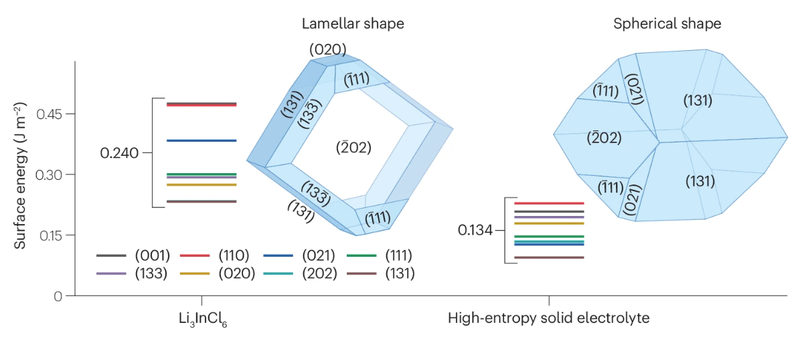
Solid-state batteries that use solid electrolytes are attracting interest for their potential safety, stability and high energy density, making them ideal for next-generation technologies (including electric vehicles and grid-scale renewable energy storage). Advances in solid electrolytes require the design and optimisation of current and new materials, informed by a deeper understanding of their properties on the atomic and nanoscale.
In the paper 'Understanding solid-state battery electrolytes using atomistic modelling and machine learning', the authors highlight progress in using atomistic modelling and machine learning techniques to gain valuable insight into inorganic crystalline solid electrolytes for lithium-based and sodium-based batteries. They discuss computational studies on oxide, sulfide and halide materials that examine three fundamental properties critical to their performance as solid electrolytes: fast-ion conduction mechanisms, interfacial effects, and chemical stability. The resulting insights help to identify design strategies for the future development of improved solid-state batteries.

