
A new phase for Solid-State Batteries
'Over the past years, SOLBAT has provided a step-change in our understanding of the fundamental challenges to solid-state batteries. This new phase allows us to move decisively towards solving these challenges and accelerating their translation into real-world technologies'.
Professor Mauro Pasta
The Faraday Institution has announced a major extension of the SOLBAT (Solid-State Metal Anode Battery) programme, led by Professor Mauro Pasta of this department, with funding confirmed through to 2030. The SOLBAT programme sits within the Faraday Institution's broader research portfolio, funded through the UK's Battery Innovation Programme by the Department for Business and Trade, and delivered by Innovate UK. This coordinated national investment reflects a strategic commitment to advancing next-generation battery technologies and strengthening the UK's position in the global electrification landscape.
The extension, worth £15.7M, builds on £29.8M invested since the programme's inception in 2018, and marks the beginning of a new phase focused on translating fundamental scientific insight into deployable solid-state battery technologies.
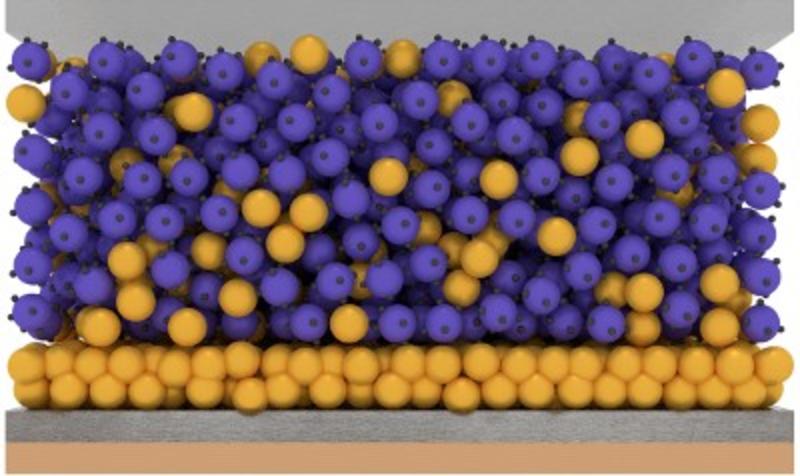
SOLBAT has established itself as a globally leading research effort in solid-state batteries, delivering critical advances in understanding the mechanisms that limit performance, lifetime and scalability. These include interfacial instability, chemo-mechanical degradation, and transport limitations in next-generation electrode architectures. The newly funded phase will shift emphasis toward solution-driven research, targeting materials design, interface engineering, and scalable cell architectures compatible with industrial requirements.
This next phase aligns with a broader UK strategy to secure leadership in advanced battery technologies and support domestic electrification. Solid-state batteries are widely recognised as a transformative technology, offering the potential for improved safety, higher energy density, and longer lifetime compared with conventional lithium-ion systems.
Part of this translation effort is the newly launched CoRe-SoLiS (Cost-effective, Resilient, Solid-State Li-S) project, a £3.4M collaborative programme between the University of Oxford (Professor Pasta), Nissan Motor Manufacturing UK, and Gelion plc, supported by £2.4M in funding from the UK Battery Innovation Programme. The project aims to integrate Gelion's Nano-Encapsulated Sulfur (NESTM) cathode technology into next-generation solid-state battery systems, in combination with Nissan's advanced battery development capabilities and Oxford's expertise in lithium alloys and interphases for solid-sate batteries. As Professor Pasta says:
'The combination of fundamental science and industrial partnership is essential to bring solid-state batteries to market. Through CoRe-SoLiS and the extended SOLBAT programme, we are building a pipeline from discovery to deployment, ensuring that UK research translates into real economic and technological impact'.
This coordinated national investment reflects a strategic commitment to advancing next-generation battery technologies and strengthening the UK's position in the global electrification landscape.
Together, the SOLBAT extension and CoRe-SoLiS project position Oxford at the centre of a rapidly evolving global effort to commercialise solid-state batteries, supporting the development of a resilient UK-based battery supply chain and accelerating the transition to electrified transport and energy systems.

