MB004 - AI-guided characterisation of superconducting materials and quantum devices
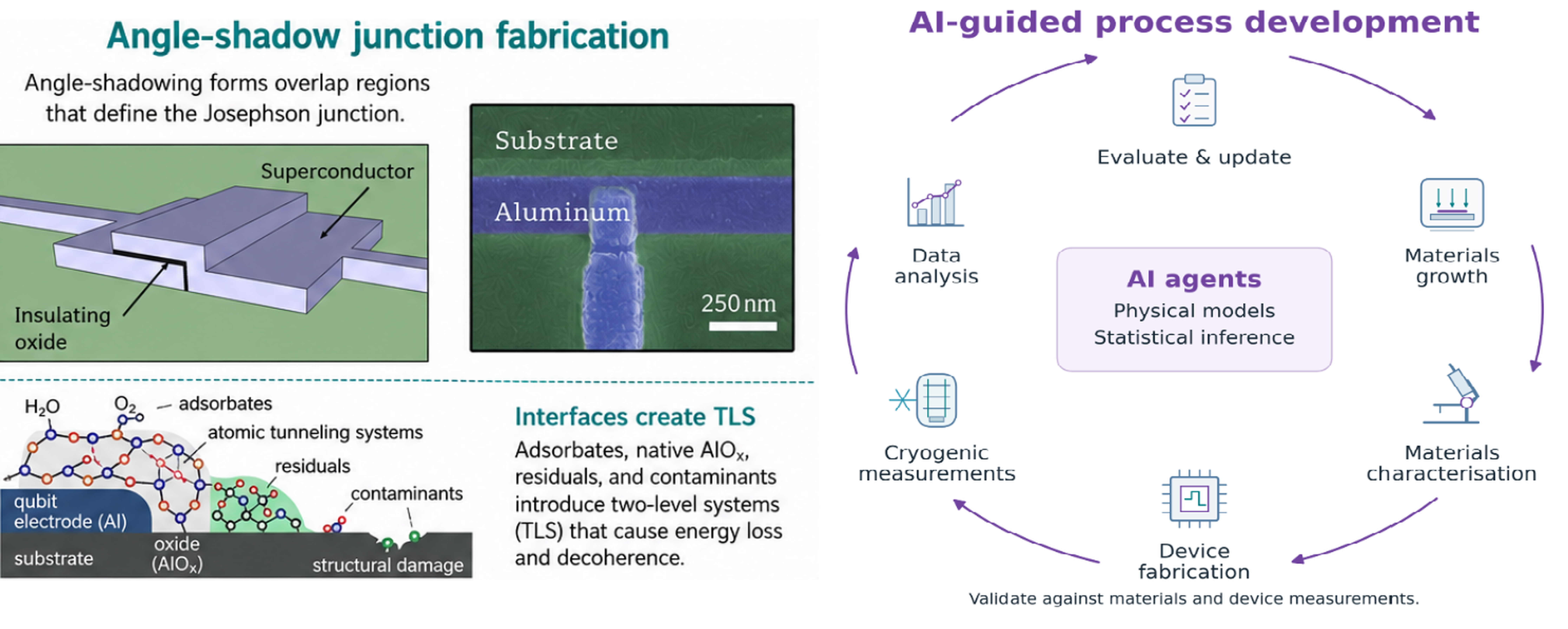
Superconducting quantum devices are sensitive to the chemistry and microstructure of the materials from which they are made. Defects in thin films, surface oxides and tunnel barriers can cause energy loss and fluctuations that limit coherence. However, similar changes in measured performance can arise from imperfect calibration, readout and unwanted interactions between qubits. Understanding how materials and processing influence device performance therefore requires measurements that distinguish these effects. This project will develop artificial intelligence methods to investigate these relationships, building on our work on path-signature analysis of qubit readout and automated quantum experiments. The student will combine large language models and AI agents with physical modelling and statistical inference to analyse materials characterisation, fabrication records and microwave measurements. The research will involve developing methods to identify possible sources of loss, select measurements that test these explanations and assess whether the findings predict the behaviour of new devices. The project will be closely linked to our research on superconducting thin-film growth, the microscopic origin of dissipation and multimode circuit quantum electrodynamics. By connecting materials information with device measurements, the aim is to guide materials selection and processing towards improved coherence and fabrication yield. We seek applicants with strong programming skills and substantial practical experience developing and evaluating systems based on large language models, including models from OpenAI, Anthropic or open-source alternatives. Experience with tool-using agents, multimodal data or experimental optimisation would be particularly relevant. Applicants should provide evidence of an implemented system and their individual contribution. Training in superconducting materials and quantum-device measurements will be provided.
The proposed links are through analysis of growth and characterisation data, investigation of microscopic loss mechanisms, and measurement and error characterisation in multimode circuits, respectively. The student’s principal contribution will be the development and experimental evaluation of AI methods, in collaboration with researchers undertaking the associated materials and device studies.
MB001 - Thin film growth of novel superconductors for quantum devices
MB002 - Understanding the microscopic origin of dissipation in superconducting qubits
MB003 - Suppressing Logical Error with Multimode circuit QED