
PSG001 - Advanced joining of fusion armour materials
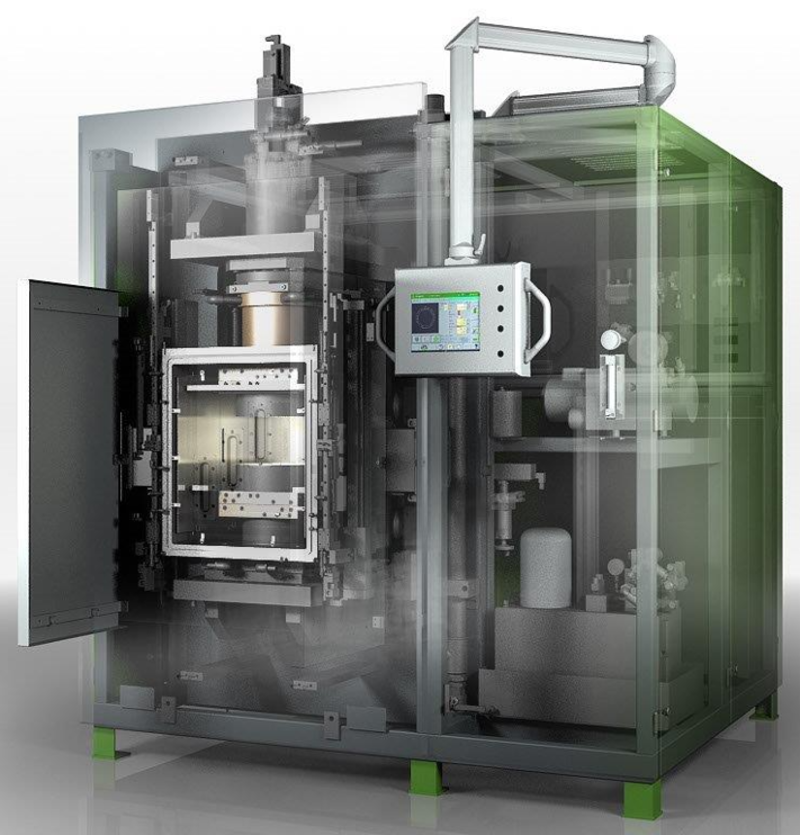
Commercial fusion reactors require reliable joining of dissimilar materials, such as millimetre-thick tungsten cladding for plasma armour bonded to complex shape steel or copper-based substrates for structural integrity. Direct joining presents myriad challenges and constraints, including generation of large residual strains that cause cracking due to a thermal expansion/contraction mismatch, potentially embrittling interfacial reactions, high manufacturing and service temperatures, limited geometries, and a restricted palette of materials suitable for the high neutron energy/flux environment. Our recent work has shown for the first time that the field assisted sintering technique (FAST), which uses rapid DC Joule heating, can produce successfully large scale (10cm x 10cm) W cladding–steel tiles with promising thermal-cycling resistance. Alongside new manufacture and characterisation capability, we have also established modelling tools to help explain the benefits produced by the FAST approach. These models are also increasingly capable of joint and bonded assembly design. However, progress has focused on a relatively narrow W/steel system. This project will research how to extend and exploit our understanding and its application to a wider range of materials, joints and scenarios within a commercial plasma reactor context.
The research will suit a materials scientist or engineer and comprises a mixture of hands-on manufacture, microstructural and mechanical characterisation, and numerical modelling. In particular the research will focus on the use of interlayers of different types and the resulting inter-linked effects on manufacturing, residual strains and failure modes, microstructural evolution and service behaviour. Although interlayers add complexity, our preliminary qualitative explorations have suggested they may allow a wider range of materials and design options for plasma facing tiles and components. Although a particular focus will be better quantifying the critical properties, especially mechanically, of the various dissimilar material interfaces created, the project has space for the research student to drive the research in preferred, productive directions and there is scope for innovative ideas. The research will involve close collaboration with Dr Fritsch, Germany, including periods spent in their applications laboratory and manufacturing facilities.