


Personal Homepages

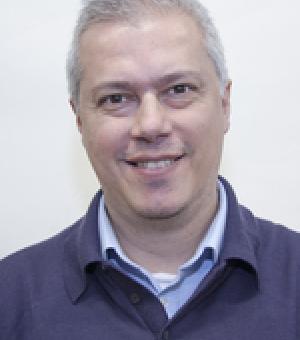
Kyriakos Porfyrakis

Dr Kyriakos Porfyrakis
Head of Laboratory for Carbon Nanomaterials
St Anne's College Research Fellow

Department of Materials
University of Oxford
16 Parks Road
Oxford OX1 3PH
UK

Tel: +44 1865 273724 (Room 195.30.12)
Tel: +44 1865 273700 (switchboard)
Fax: +44 1865 273730

Fullerenes, Nanotubes and Graphene Group

Summary of Interests

Synthesis, purification, characterization and functionalization of endohedral fullerenes and their derivatives for quantum nano-electronic applications. Fullerenes are a new class of carbon-based materials. Due to their unusual molecular structure, fullerenes have been shown to possess attractive chemical, physical, magnetic, and electronic properties and are finding an increasing number of applications. Perhaps the most interesting feature of the fullerenes is that due to their cage-like structure they can trap atoms inside their empty "shell". The first of the so-called endohedral fullerenes were lanthanum containing fullerene cages, produced by vaporisation of lanthanum-doped graphite rods. To date, group-3 metals (Sc, Y), lanthanides (Ce, Gd, Pr, Ho, etc), group-2 metals (Ca, Sr, Ba), group-15 elements (N, P) and noble gases (He, Ne, Ar, Kr and Xe) have all been encapsulated in fullerenes.

  • Alan Glanvill Award, IOM3, 2005

Current Research Projects

Synthesis and characterization of dimers for quantum entanglement
G. Liu, Dr. K. Porfyrakis, Dr. A.N. Khlobystov*, Dr. A. Ardavan**, Professor G.A.D. Briggs
The fabrication of asymmetric dimers of endohedral fullerenes containing nitrogen atoms will enable spin resonance experiments to be performed that demonstrate entanglement between electron spins. This will constitute a crucial proof of principle of controlled entanglement in carbon nanomaterials. Chemical synthesis routes will be used that preserve the delicate endohedral nitrogen species, including the use of metal atoms to join the fullerenes through metal coordination bonds or via functionalising groups. (*University of Nottingham; **Clarendon Laboratory, Department of Physics)

Supramolecular structures for nanoelectronics and quantum computing
Professor M.R. Castell, Professor G.A.D. Briggs, Dr. A. Ardavan*, Dr. S.C. Benjamin, Dr. K. Porfyrakis
Conventional lithographic techniques for surface patterning have powered technological progress for decades and can now reach dimensions down to 20-30 nm. We shall pursue a fundamentally different approach to templating based on a 'bottom-up' nanotechnology in which nanoscale building blocks spontaneously adopt an ordered configuration through a self-assembly process. We shall use these templates to create structures suitable for nanoelectronics and quantum computing. The primary approach will be deposition of a passive molecular 'scaffolding' followed by subsequent deposition of a molecular species that forms an ordered distribution within that scaffolding. The species employed will be an endohedral fullerene with the property that the encapsulated atom can store information in the state of its nuclear and/or electron spin. In this way we shall create ordered arrays of quantum bits (qubits). Experiments will be designed to characterise the qubit-qubit intereactions, and the results will be used to guide further generations of nanoarray synthesis, with the ultimate goal of creating structures suitable for information processing. (*Department of Physics)

Dimers for quantum computing
Dr. K. Porfyrakis, Dr. A. Ardavan*, Professor G.A.D. Briggs
Electron spin active dimers could be used to realize a two-qubit system for quantum computing. We have synthesized directly bonded empty fullerene dimers by high speed vibration milling. The same method can be used to synthesize endohedral fullerene dimers to realize a two-qubit system. We are investigating the switchable dimers for a controllable two-qubit system. We are synthesizing azobenzene bridged nitroxyl free radical dimers and fullerene dimers. UV/Vis light can be used to switch the bridge from trans- to cis-, or vice verse, in order to control the qubit interaction, which can be probed by ESR method. (*Clarendon Laboratory, Department of Physics)

Manufacture of HPLC Columns for Separation of N@C60
Dr. A.N. Khlobystov*, Dr. K. Porfyrakis, Dr. A. Ardavan**, Professor G.A.D. Briggs
N@C60 and C60 are difficult to separate, as they have virtually indistinguishable affinities for most materials. We have targeted their most apparent difference, mainly that N@C60 is more polarizable than C60, to facilitate separation of the two molecules. We are designing materials that have exceptionally large polarizabilities and attaching them to silica for use as packing material for high performance liquid chromatography columns.(*University of Nottingham; **Clarendon Laboratory, Department of Physics)

Molecules inside Nanotubes: a Synergistic Host-Guest System
Dr. A.N. Khlobystov*, Dr. K. Porfyrakis, Professor G.A.D. Briggs, Dr. A. Ardavan*, Professor R.J. Nicholas*
We are exploring interactions between carbon nanotubes and various organic and organometallic molecules, including fullerenes. These nanostructures demonstrate unique synergistic host-guest properties. Structural and dynamic behaviour of the encapsulated molecules is substantially affected by confinement in the nanotube and is mainly controlled by geometrical parameters of the host. Complementarily, the mechanical and electronic properties of the tubular host are influenced by the guest molecules due to the coupling between the molecular orbitals of the guest and the electronic bands of the nanotube. Host-guest systems of this type exhibit a range of functional properties which can be exploited in chemistry and nanotechnology. (*University of Nottingham; **Clarendon Laboratory, Department of Physics)

Endohedral Fullerenes for Quantum Information Processing
Dr. J.J.L. Morton, Dr. K. Porfyrakis, Dr. A.M. Khlobystov*, Dr. A. Ardavan**, Professor G.A.D. Briggs
One of the most remarkably robust examples of an unpaired electron spin within a molecule is that of a nitrogen atom trapped inside a spherical fullerene (termed N@C60). We have measured the coherence time of a qubit encoded within this electron spin system and performed single qubit operations using pulsed electron paramagnetic resonance (EPR). We are investigating the synthesis of several types of endohedral fullerene dimers including directly-bonded and oxygen-bridged dimers. These multi-qubit systems will then be characterised by EPR. We shall study the ability to control qubit interactions through the inter-fullerene bridge, and move on to investigate larger qubit arrays. (*University of Nottingham; **Clarendon Laboratory, Department of Physics)

Endohedral fullerene derivatives for Quantum Information Processing
B.J. Farrington, Dr. M. Jevric, Dr. A. Ardavan**, Professor G.A.D. Briggs, Dr. K. Porfyrakis
Using new high-throughput purification technologies it is now possible to produce high purity N@C60 samples on a sufficiently large scale to allow chemical functionalization of the fullerene cage. We are developing the chemistry of endohedral fullerenes with the aim of synthesizing initially dimeric and subsequently oligomeric chains of spin-active molecules. We shall control the distance between endohedral fullerenes by designing appropriate bridge molecules with varying length. We shall develop the ability to engineer and manipulate spin-spin interactions along these chains. A molecular structure of this kind could constitute a key building block for any technology based on information processing with electron spins. (**Clarendon Laboratory, Department of Physics)

7 public active projects

Research Publications

del Carmen Gimenez-Lopez, M., Gardener, J., Shaw, A.Q., Iwasiewicz-Wabnig, A., Porfyrakis, K., Balmer, C., Dantelle, G., Hatdjipanayi M., Crossley, A., Champness, N.R., Castell, M.R., Briggs, G.A.D. and Khlobystov, N.A., 'Endohedral metallofullerenes in self-assembled monolayers', Physical Chemistry Chemical Physics, 12, (2010),  123 – 131.

Iwasiewicz-Wabnig, A., Porfyrakis, K., Briggs G.A.D., and Sundqvist, B., 'Investigations of N@C60 and N@C70 stability under high pressure and high temperature conditions', Status Solidi B, 246, (11–12), (2009), 2767–2770.

Dantelle, G., Tiwari, A., Rahman, R., Plant, S.R., Porfyrakis, K., Mortier, M., Taylor, R.A., and Briggs, G.A.D., 'Optical properties of Er3+ in fullerenes and in β-PbF2 single-crystals',  Materials, 32, (2009), 251-256.

Plant, S.R., Cheong Ng, T., Warner, J.H., Dantelle, G.,  Ardavan, A., Briggs, G.A.D. and Porfyrakis, K., 'A bimetallic endohedral fullerene: PrSc@C80', Communications, (2009), 4082-4084.

Plant, S.R., Dantelle, G., Ito, Y., Cheong Ng, T., Ardavan, A., Shinohara, H., Briggs, G.A.D., and Porfyrakis, K., 'Acuminated fluorescence of Er3+ centres in endohedral fullerenes by inclusion of a carbide cluster',  Physics Letters, 476, (1-3), (2009) 41-45.

Norenberg, C.,  Leigh, D.F.,  Cattaneo, D., Porfyrakis, D.,  Li Bassi, A., Casari, C.S.,  Passoni, M., Owen, J.H.G., and Briggs, G.A.D., 'Self-assembly and electronic effects of Er3N@C80 and Sc3N@C80 on Au(111) and Ag/Si(111) surfaces', Journal of Physics: Conference Series, 100, (2008), 052080.

Tiwari, A., Dantelle, G., Porfyrakis, K.,  Watt, A.A.R.,  Ardavan, A., and Briggs, G.A.D., 'Magnetic properties of ErSc2N@C80, Er2ScN@C80 and Er3N@C80 fullerenes', Chemical Physics Letters, 466, (4-6), (2008) 155-158.

Cantone, A.L., Buitelaar, M.R.,  Smith, C.G., Anderson, D., Jones, G.A.C., Chorley, S.J., Casiraghi, C., Ferrari, A.C., Shinohara, H.,  Ardavan, A., Warner, J.H., Watt, A.A.R., Porfyrakis, K., and Briggs, G.A.D., 'Electronic transport characterization of Sc@C82 single walled carbon nanotube peapods',  Journal of Applied Physics, 104, 8, (2008) 083717.

Tiwari, A., Dantelle, G., Porfyrakis, K., Ardavan, A., and Briggs, G.A.D., 'Temperature-dependent photoluminescence study of ErSc2N@C80 and Er2ScN@C80 fullerenes', Physica Status Solidi B, 245, 10, (2008) 1998-2001.

Silly, F., Shaw, A.Q.,  Porfyrakis, K., Warner, J.H., Watt, A.A.R., Castell, M.R., Umemoto, H., Akachi, T., Shinohara, H., and Briggs, G.A.D., 'Grating of single Lu@C82 molecules using supramolecular network', Chemical Communications, (2008) 4616-4618.

Morley, G.W., Porfyrakis, K., Ardavan, A., and van Tol, J., 'Dynamic Nuclear Polarization with simultaneous excitation of electronic and nuclear transitions', Applied Magnetic Resonance,34, (2008) 347-353.

Warner, J.H., Ito, Y., Zaka, M.,  Ge, L., Akachi, T., Okimoto, H., Porfyrakis, K.,  Watt, A.A.R., Shinohara H., and Briggs, G.A.D., 'Rotating fullerene chains in carbon nano-peapods', Nano Letters, 8, 8, (2008), 2328-2335. Selected as a “research highlight” by Nature Nanotechnology, published online on the 11th of July 2008.

Buitelaar, M.R.,  Fransson, J.,  Cantone, A.L., Smith,C.G.,  Anderson, D., Jones, C.A.G.,  Ardavan, A.,  Khlobystov, A.N., Watt, A.A.R., Porfyrakis, K., and Briggs, G.A.D., 'Pa uli spin blockade in carbon nanotube double quantum dots', Physical Review B, 77, (2008) 245439.

Morton, J.J.L.,  Tiwari, A., Dantelle, G., Porfyrakis, K.,  Ardavan, A., and Briggs, G.A.D., 'Switchable ErSc2N rotor within a C80 fullerene cage: An EPR and photoluminescence excitation study', Physical Review Letters, 101, (2008) 013002.

Pagona, G., Rotas, G.,  Khlobystov, A.N., Chamberlain, T.W., Porfyrakis, K., and Tagmatarchis, N., 'Azafullerene encapsulated within single-walled carbon nanotubes', Journal of the American Chemical Society, 130, 19, (2008), 6062-6063.

Warner,J.H.,  Watt, A.A.R., Ge, L., Porfyrakis, K., Akachi, T., Okimoto, H., Ito, Y., Ardavan, A., Montanari, B., Jefferson, J.H., Harrison, N.M., Shinohara, H., and Briggs, G.A.D., 'Dynamics of paramagnetic metallofullerenes in carbon nanotube peapods', Nano Letters, 8, 4, (2008), 1005-1010.

Zhang, J., Porfyrakis, K., Morton, J.J.L., Sambrook, M.R., Xiao, L., Ardavan, A. and Briggs, G.A.D. (2008) 'Photo-isomerization of a fullerene dimer' Journal of Physical Chemistry C 112(8) 2802-2804.

Ardavan, A., Morton, J.J.L., Benjamin, S.C., Porfyrakis, K., Briggs, G.A.D., Tyryshkin, A.M. and Lyon, S.A. (2007) 'Manipulation of quantum information in N@C60 using electron and nuclear magnetic resonance' Physica Status Solidi B 244(11) 3874-3878.

Deak, D.S., Porfyrakis, K. and Castell, M.R. (2007) 'C70 ordering on nanostructured SrTiO3(001)' Chemical Communications 2941-2943.

Deak, D.S., Silly, F., Porfyrakis, K. and Castell, M.R. (2007) 'Controlled surface ordering of endohedral fullerenes with a SrTiO3 template' Nanotechnology 18(7) 075301.

Leigh, D.F., Nörenberg, C., Cattaneo, D., Owen, J.H.G., Porfyrakis, K., Li Bassi, A., Ardavan A. and Briggs, G.A.D. (2007) 'Self-assembly of Trimetallic Nitride Template Fullerenes on Surfaces Studied by STM' Surface Science 601 2750-2755.

Morley, G.W., van Tol, J., Ardavan, A., Porfyrakis, K., Zhang J. and Briggs, G.A.D. (2007) 'Efficient Dynamic Nuclear Polarization at High Magnetic Fields' Physical Review Letters 95 220501.

Morton, J.J.L., Tyryshkin, A.M., Ardavan, A., Porfyrakis, K., Lyon, S.A. and Briggs, G.A.D. (2007) 'Environmental effects on electron spin relaxation in N@C60' Physical Review B 76 085418 (quant-ph/0611108).

Porfyrakis, K., Sambrook, M.R., Hingston, T.J., Zhang, J., Ardavan, A. and Briggs, G.A.D. (2007) 'Synthesis of fullerene dimers with controllable length' Physica Status Solidi B 244(11) 3849-3852.

Silly, F., Shaw, A.Q., Porfyrakis, K., Briggs, G.A.D. and Castell, M.R. (2007) 'Pairs and heptamers of C70 molecules ordered via PTCDI-melamine supramolecular networks' Applied Physics Letters 91 253109.

Tiwari, A., Dantelle, G., Porfyrakis, K., Taylor, R.A., Watt, A.A.R., Ardavan A. and Briggs, G.A.D.(2007)'Configuration-selective spectroscopic studies of Er3+ centers in ErSc2N@C80 and Er2ScN@C80 fullerenes' Journal of Chemical Physics 127 194504.

Projects Available

Nanomaterials for quantum information processing
GAD Briggs / A Ardavan (Department of Physics) / JJL Morton / K Porfyrakis / JH Warner

Quantum information processing offers one of the most exciting challenges in the study and development of nanomaterials. It is at the cutting edge of quantum nanoelectronics, and we are part of the world wide race to develop a scalable quantum computer. We need materials with quantum states that can be individually controlled and measured, and yet which are sufficiently robust against decoherence that they can sustain a sequence of quantum manipulations and interactions. We lead the world in using the new family of fullerene materials (popularly known as Bucky balls), which can be used to contain atomic and molecular species inside a cage that separates them from the quantum environment. We can insert fullerenes into carbon nanotubes to create one-dimensional 'peapod' arrays, which we can image by HRTEM, and we are also developing other schemes for molecular self-assembly of fullerenes and other functional molecules. We can also use other materials such as doped silicon and diamond. We can store the quantum information in electron or nuclear spin, and exchange it between the two. We can manipulate and characterize the spin states by electron paramagnetic resonance and also optically. By creating entanglement between several spins, it will be possible to develop sensors that exceed the standard quantum limit. By storing information holographically in collective spin states, it will be possible to process quantum information in large ensembles of spins. There will be several projects with these nanomaterials, ranging from synthesis and characterization to experimental implementation of candidate schemes for quantum computing. The research is highly interdisciplinary, and there is scope for a range of skills and interests from materials science and chemistry to experimental quantum physics (qsd.materials.ox.ac.uk). In association with the experimental programme which will take place within a large and active research group (www.qipirc.org), there will be theory and modelling projects with Dr S C Benjamin, Dr J Fitzsimons, Dr B W Lovett and Professor J H Jefferson (www.qunat.org). There may be possibilities for industrial support and for international travel and collaboration.

Also see homepages: Andrew Briggs John Morton Kyriakos Porfyrakis Jamie Warner

Endohedral metallofullerenes for nanotechnological applications
K Porfyrakis / G A D Briggs

Fullerenes are fascinating carbon-based materials. Their most interesting feature is that due to their cage-like structure they can trap atom(s) inside their empty "shell". This project explores the synthesis and chemical functionalization of endohedral metallofullerenes: Mn@Cm (where n=1-3 and m ≥ 60).
We shall synthesise novel endohedral metallofullerenes using a new arc-discharge facility. We shall customise the fullerene molecular structure in order to tune their properties, such as their HOMO-LUMO gap. We shall develop methods for the covalent functionalization of endohedral metallofullerenes. We shall investigate the effect of rigid or flexible functional groups on the electronic properties of the endohedral species. We shall focus on malonate and pyrrolidine adducts initially, but other schemes will also be considered. Endohedral metallofullerenes and their derivatives will be purified by high-performance liquid chromatography (HPLC) and will be characterized by various spectroscopic techniques available to us, including mass spectrometry, UV-Vis-NIR and FTIR spectroscopies and other analytical tools.
These nanomaterials are of interest for quantum information processing, but are also attractive for opto-electronics and photovoltaic applications.

Also see homepages: Andrew Briggs Kyriakos Porfyrakis

Also see a full listing of New projects available within the Department of Materials.