


Hot Topics


Recently Updated

more changes...


Personal Homepages

Christopher R M Grovenor

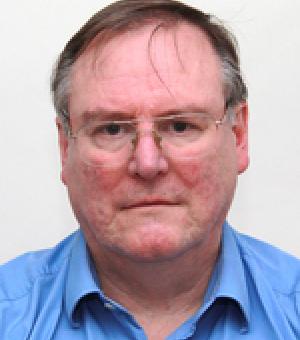
Professor Chris Grovenor

Professor of Materials
Head of Department

Department of Materials
University of Oxford
Parks Road
Oxford OX1 3PH
UK

Tel: +44 1865 273737
Tel: +44 1865 273761 (Room 179.30.17)
Tel: +44 1865 273700 (switchboard)
Fax: +44 1865 273789 (general fax)

Fellow of St Anne's College,
Tutor in Materials
Tel: +44 1865 274839

High Temperature Superconductivity Group Homepage

[ Quicklinks: Research Summary Current Research Projects Recent Publications D.Phil. Projects Available ]

Summary of Research Interests

Applied superconductivity and the processing of electronic materials, and leader of the group developing applications for our new CAMAC NANOSIMS 50. Other recent work has focused on understanding the fundamental limitations in the processing of high temperature superconducting materials and developing techniques for reliable preparation of HTS components. The deposition and characterisation of nano-structured oxide films for gas permeation and photovoltaic electrode applications has been a growing area of interest.

Current Research Projects

Superconducting Metamaterials for Near Field Microscopy Applications
Dr. S.C. Speller, Dr. C. Stevens*, Professor D. Edwards*, Professor C.R.M Grovenor
Novel Magnetic Resonance Microscopes have been designed to offer dramatic improvements in 3D imaging for medical and biological applications. A sub-wavelength tapered waveguide structure enables the sensing of local magnetic fields. This "metaprobe" is ideally fabricated from superconducting materials to maximise the sensitivity of the instrument. This research project is concerned with the demonstration of practical methods to fabricate these extremely challenging superconducting/dielectric composites. (*Engineering Dept., Univ. of Oxford).(Funded by Royal Academy of Engineering / EPSRC)

BegbrokeNano
Dr. A. Crossley, Dr. C Johnston, Professor C.R.M. Grovenor, et al.
BegbrokeNano, operated since 2005 by OMCS at Begbroke Science Park, is one of the UK Micro Nano Technology (MNT) Centres of Excellence funded by the DTI to provide cost effective open access facilities to organisations to accelerate commercialisation of MNT. BegbrokeNano, in partnership with leading analytical equipment manufacturers offers characterisation of products and processes at the micro and nano scale.

NanoSIMS analysis of early life on earth
Professor M. Brasier*, Dr. D. Wacey*, Dr. M. Schroder, Professor C.R.M. Grovenor
Endolithic microborings in Archean sedimentary rocks provide important evidence of early life on Earth and beyond. They comprise small tubes (typically 10 microns in diameter) within siliceous chert, often infilled with Carbon and sulphur bearing minerals. The authenticity of such purported microfossils, however, depends on being able to establish a biogenic origin. Brazier et al in the Department of Earth Science have recently discovered a unique assemblage of <3520 Ma old mineralised microtubules from Western Australia. This is potentially the ""oldest"" example of life on Earth. We are using the Cameca NanoSIMS 50 to measure Carbon and Sulphur isotopic ratios in extremely small volumes to ascertain whether the mineral assemblages are indeed biogenic in origin. (Funded by NERC) (*Department of Earth Sciences)

NanoSIMS analysis of biomineralisation processes in marine coccoliths
Dr. R. Rickaby*, Dr. M. Schroder, Professor C.R.M. Grovenor
Palaeoclimates can be reconstructed using trace element ratios in the calcite skeletons of micro-marine organisms such as Coccolithophores and Foraminifera. These unicellular, calcifying oceanic phytoplankton, provide outstanding models for the analysis of the biomineralisation processes because they are robust, simple systems easy to culture in the laboratory. There are at least two steps during the biomineralisation process which must impact the calcite chemistry; the transport of ions from seawater across membranes to the site of precipitation within an intracellular vesicle, and the precipitation of calcite on an organic matrix. We are using the Cameca NanoSIMS 50 to study these processes in order to develop a better understanding of these key biomineralisation processes. (In collaboration with Dr. Alison Taylor and Prof. Colin Brownlee at the Marine Biological Association in Plymouth). (*Department of Earth Sciences) Funded by EPSRC.

Growth of thick epitaxial films of Tl-2212 for novel THz device structures
M. Korsah, Dr. S. Speller, Professor C.R.M. Grovenor, Dr. P. Warburton*
Superconducting films of the highly anisotropic Tl-2212 phase provide a simple way of fabricating novel device structures containing a large number of precisely positioned Josephson junctions. This project is to grow Tl-2212 thin films with microstructures specially optimised for these devices. Optimising epitaxial growth quality in films with thicknesses greater than 1 micron is the key technical challenge of the project, and requires a very detailed understanding of nucleation and growth processes in these films. (Funded by EPSRC and in collaboration with University College London*)

Synthesis and microstructure of MgB2 powders and wires
C. Dancer, Professor C.R.M. Grovenor, Dr. R.I. Todd, Dr. P. Kovac*, Dr. T. Prikhna**
MgB2 is a most promising new superconducting material for high current applications at temperatures below 30K. We are studying new methods for the chemical synthesis of high quality MgB2 powder with controlled particle size and impurity content. At the same time we are collaborating with the Kovac research group in Slovakia on the analysis of the microstructure of high current wires fabricated with commercial starting powder. XRD, SEM and EPMA analysis are all key aspects of the work, with high resolution SIMS analysis of oxygen and H contents. (*Institute of Electrical Engineering, Slovak Academy of Sciences, **Institute for Superhard Materials, Ukraine). (Funding provided by EPSRC DTA studentship for CD.)

Microstructural characterisation of MgB2 superconducting wires and tapes
S. Latif, Dr. S. Speller, Professor C.R.M. Grovenor
Superconducting ceramic samples fabricated in wire form are being characterised by X-ray diffraction and electron microscopic techniques. Of particular interest is the determination of the phase distribution and alignment, grain boundary structure and chemistry, and impurity phase chemistry in materials prepared both within the University and by a number of collaborators, and the correlation of these features with critical current measurements. SEM, XRD texture analysis and orientation imaging microscopy techniques are being used to study the key microstructural features.

NanoSIMS analysis of metallic and electronic materials
S. Ahmed, Dr. M. Schroder, Dr. S. Lozano-Perez, Professor C.R.M. Grovenor, Professor J.M. Titchmarsh
A Cameca NanoSIMS50 has recently been installed at the Oxford University Begbroke Science Park. This equipment is a state-of-the-art machine for chemical analysis with high spatial resolution and very high sensitivity for most elements. We will use this new facility in projects where the accurate analysis of the distribution of dilute element is critical to developing a better understanding of the materials properties. Key projects include; [1] Crack and grain boundary chemistry in stainless steels (in collaboration with the Universities of Manchester and Birmingham and Johnson Matthey, and with INSS in Japan) [2] Trace element chemistry in structural steels (in collaboration with Corus) Funding provided by EPSRC for DTA studentship for SA.

Polymer based barrier materials
P. Islam, Professor C.R.M. Grovenor, Dr. H.E. Assender, R. Hammond-Smith*
Thin film barriers to oxygen and water are critical components in a very wide range of industrial application, including display technologies, polymer electronics and packaging. This project will investigate the potential of a family of reactive liquid crystal coatings on polymer substrates, focussing on defining the relationships between the liquid crystal components, processing methodology, resulting phases and mesostructure, and permeation barrier properties. (*Merck Chemicals Ltd)

NanoSIMS analysis of Biological Materials
K. Smart, G. Karney, K-H. Lau, Dr. M. Schroder, Professor C.R.M. Grovenor, Dr. J.T. Czernuszka
A Cameca NanoSIMS50 has recently been installed at the Oxford University Begbroke Science Park. This is a state-of-the-art facility for chemical analysis with high spatial resolution and very high sensitivity for most elements. 50% of the time on this new facility is dedicated to studies of biological materials with support from the Life Science Inititative of the EPSRC under GR/T19797. Current projects include; [1] the localisation of metal complexes in a study of new imaging and therapeutic agents for hypoxic tissue (with Prof. J. Dilworth, Department of Chemistry). [2] Trace element localisation and isotopic analysis in teeth (with Dr A.Pike, Dept. Archaeology, University of Bristol and Prof. J.Elliot, QML) [3] Metal localisation in hyperaccumulator plants (with Professor Andrew Smith, Department of Plant Sciences) [4] SIMS analysis of the proteome of a single cell (with Profs. G.Misevic and C. Ripoll, Laboratoire "Assemblages Moléculaires: Modélisation et Imagerie SIMS" Faculté des Sciences de l'Université de Rouen)

10 public active projects

Research Publications

Ahmed, S., Titchmarsh, J.M., Kilburn, M.R. and Grovenor, C.R.M. (2006). 'Examination of the influence of boron on the microstructure and properties of low C ferritic steels using NanoSIMS and TEM' Applied Surface Science 252(19) 7062-7065.

Dark, C.J., Speller, S.C. and Grovenor, C.R.M. (2006). 'The development of bi-epitaxial texture and high grain boundary J(c) values in Tl-2212 films on MgO substrates' Superconductor Science & Technology 19(6) 484-492.

Grovenor, C.R.M., Smart, K.E., Kilburn, M.R., Shore, B., Dilworth, J.R., Martin, B., Hawes, C. and Rickaby, R.E.M. (2006). 'Specimen preparation for NanoSIMS analysis of biological materials' Applied Surface Science 252(19) 6917-6924.

Speller, S.C., Wu, H., Rek, Z.U., Bilello, J.C. and Grovenor, C.R.M. (2006). 'Development of microstructure in T1-2212 thin films and possible influence on microwave surface resistance values' Journal of Materials Research 21(7) 1645-1657.

Warburton, P.A., Fenton, J.C., Korsah, M. and Grovenor, C.R.M. (2006). 'Josephson current suppression in three-dimensional focused-ion-beam fabricated sub-micron intrinsic junctions' Superconductor Science & Technology 19(5) S187-S190.

Xie, Z., Burlakov, V.M., Henry, B.M., Kirov, K.R., Smith, H.E., Grovenor, C.R.M., Assender, H.E., Briggs, G.A.D., Kano, M. and Tsukahara, Y. (2006). 'Intensity-dependent relaxation of photoconductivity in nanocrystalline titania thin films' Physical Review B 73(11).

Xie, Z., Henry, B.M., Kirov, K.R., Smith, H.E., Barkhouse, A., Grovenor, C.R.M., Assender, H.E., Briggs, G.A.D., Webster, G.R., Burn, P.L., Kano, M. and Tsukahara, Y. (2006). 'Study of the effect of changing the microstructure of titania layers on composite solar cell performance' Thin Solid Films 511 523-528.

Daniels, M.J., Zabinski, J.S., Wu, H., Grovenor, C.R.M. and Bilello, J.C.: 'Microstructure and chemistry of annealed Al-Cu-Fe-Cr quasicrystalline approximant coatings' Journal Of Materials Research 20 (1) (2005) 176-182.

Dark, C., Speller, S., Wu, H., Sundaresan, A., Tanaka, Y., Burnell, G. and Grovenor, C.R.M.: 'Grain boundary properties of T1-2212 and T1-1223 thin films' Ieee Transactions On Applied Superconductivity 15 (2) (2005) 2931-2934.

Grovenor, C.: 'Far out - putting new materials in space' Materials World 13 (5) (2005) 26-28.

Haigh, S., Kovac, P., Prikhna, T., Savchuk, Y.M., Kilburn, M., Salter, C.J., Hutchison, J. and Grovenor, C.R.M.: 'Chemical interactions in Ti-doped MgB2 superconducting bulk samples and wires' Superconductor Science & Technology 18 (2005) 1190-1196.

Xie, Z., Burlakov, V.M., Henry, B.M., Kirov, K.R., Grovenor, C.R.M., Assender, H.E., Briggs, G.A.D., Kano, M. and Tsukahara, Y.: 'Time evolution of photoconductivity in TiO2 electrodes fabricated by a sol-gel method' Materials for photovoltaics, Matter. Res. Soc. Symp. Proc.,836 (2005) L2.4.

Henry, B.M., Assender, H.E., Erlat, A.G., Grovenor, C.R.M., Briggs, G.A.D., Miyamoto, T. and Tsukahara, Y.: 'Gas barrier properties of transparent metal oxide coatings on PET film' Society of Vacuum Coaters 47th Annual Technical Conference Proceedings (2004) 609.

Kirov, K.R., Burlakov, V.M., Carey, M.J., Henry, B.M., Xie, Z.B., Grovenor, C.R.M., Assender, H.E., Webster, G.R. and Briggs, G.A.D.: (2004). 'Non-steady state operation of polymer/TiO2 photovoltaic devices'. Nanostructured Materials In Alternative Energy Devices. Warrendale, Materials Research Society. 822: 71-76.

Kirov, K.R., Burlakov, V.M., Xie, Z.B., Henry, B.M., Carey, M.J., Grovenor, C.R.M., Burn, P.L., Assender, H.E. and Briggs, G.A.D.: (2004). 'Non-steady state operation of polymer/TiO2 photovoltaic devices'. Organic Photovoltaics V. Bellingham, Spie-Int Society Optical Engineering. 5520: 68-75.

Rickaby, R.E.M., Belshaw, N., Kilburn, M., Taylor, A., Grovenor, C. and Brownlee, C.: 'Submicron-scale coccolith chemistry revealed by NanoSIMS' Geochimica Et Cosmochimica Acta 68 (11) (2004) A215-A215.

Carey, M.J., Burlakov, V.M., Henry, B.M., Kirov, K.R., Webster, G.R., Assender, H.E., Briggs, G.A.D., Burn, P.L. and Grovenor, C.R.M. (2004). Nanocomposite titanium dioxide/polymer photovoltaic cells: effects of TiO2 microstructure, time and illumination power. Organic Photovoltaics 4: Proc. SPIE. Kafafi, Z.H. and Lane, P.A. 5215.

Erlat, A.G., Henry, B.M., Grovenor, C.R.M., Briggs, A.G.D., Chater, R.J. and Tsukahara, Y.: 'Mechanism of water vapor transport through PET/AlOxNy gas barrier films.' Journal Of Physical Chemistry B 108 (3) (2004) 883-890.

Grovenor, C.R.M., Goodsir, L., Salter, C.J., Kovac, P. and Husek, I.: 'Interfacial reactions and oxygen distribution in MgB2 wires in Fe, stainless steel and Nb sheaths.' Superconductor Science & Technology 17 (3) (2004) 479-484.

Husek, I., Kovac, P., Grovenor, C.R.M. and Goodsir, L.: 'Microhardness as a tool for filament density and metal sheath analysis in MgB2/Fe(Cu) wires.' Superconductor Science & Technology 17 (2004) 971-976.

Kovac, P., Husek, I., Melicek, T., Grovenor, C.R.M., Haigh, S. and Jones, H.: 'Improvement of the current carrying capability of ex-situ MgB2 wires by normal particale additions.' Superconductor Science & Technology 17 (2004) 1225.

Warburton, P.A., Kuzhakhmetov, A.R., Chana, O.S., Burnell, G., Blamire, M.G., Schneidewind, H., Koval, Y., Franz, A., Muller, P., Hyland, D.M.C., Dew-Hughes, D., Wu, H. and Grovenor, C.R.M.: 'Josephson fluxon flow and phase diffusion in thin-film intrinsic Josephson junctions.' Journal Of Applied Physics 95 (9) (2004) 4941-4948.

Henry B.M., Erlat A.G., Grovenor C., Briggs G.A.D., Uyama H. and Tsukahara Y.: 'Microstructural and barrier properties of indium tin oxide films' Proc. 16th conference on vacuum web coating, AIMCAL, (2003).

Henry B.M., Erlat A.G., Grovenor C.R.M., Briggs G.A.D., Miyamoto T. and Tsukahara Y.: 'Permeation studies of transparent barrier coatings' SVC 46th Annual Technical Conference Procedings, (2003).

Henry B.M., Kirov K.R., Carey M.J., Grovenor C.R.M., Assender H.E., Briggs G.A.D., Webster G.R., Burn P.L., Uyama H. and Tsukahara Y.: 'Titanium dioxide/polymer photovoltaic cells' Pro. Photovoltaic Science, Applications and Technology (C79), R. Gottschaig, Loughborough, UK, (2003).

Kovac P., Husek I., Grovenor C. and Salter C.: 'Properties of as-deformed and post-annealed MgB2/Fe(Fe-alloy) composite wires' Superconductor Science & Technology 16, 292-296 (2003).

Speller S.C., Wu H.Z. and Grovenor C.R.M.: 'Buffer layers for Tl-2212 thin films on MgO and sapphire substrates' IEEE Transactions on Applied Superconductivity 13, 2713-2716 (2003).

Warburton P.A., Kuzhakhmetov A.R., Bell C., Burnell G., Blamire M.G., Wu H., Grovenor C.R.M. and Schneidewind H.: 'Sub-micron thin film intrinsic Josephson junctions' IEEE Transactions on Applied Superconductivity 13, 821-824 (2003).

Whiteley R.M., Goodall R., Moore J.C., Speller S.C. and Grovenor C.R.M.: 'Electro-epitaxial buffer layers for REBCO tape architectures' IEEE Transactions on Applied Superconductivity 13, 2639-2642 (2003).

Wu H.Z., Speller S.C., Pal S., Edwards D.J. and Grovenor C.R.M.: 'Microstructure control in the growth of large area T1-2212 thin films' IEEE Transactions on Applied Superconductivity 13, 2871-2874 (2003).

Henry B.M., Erlat A.G., Assender H.E., Grovenor C.R.M., Briggs G.A.D. and Tsukahara Y.: 'Vacuum web coater for the research of multilayer films' Proc. 16th conference on vacuum web coating, AIMCAL, (2002).

Warburton P.A., Kuzhakhmetov A.R., Chana O.S., Hyland D.M.C., Grovenor C.R.M., Burnell G., Blamire M.G. and Schneldewind H.: 'Multiple-peak switching current distribution in Tl-Ba-Ca-Cu-O intrinsic Josephson junctions' Physica C-Superconductivity and Its Applications 372, 322-326 (2002).

Projects Available

NanoSIMS analysis of grain boundary chemistry/property relationships
C R M Grovenor

The Department has a state-of-the-art high resolution Secondary Ion Mass Spectrometry facility that allows the study of ppm levels of impurities trace elements with sub-micron spatial resolution. There are many areas of research in materials where such a tool provides unique information on the distribution of dilute species, and we are especially interested in the application of NanoSIMS analysis to study the fundamental mechanisms of intergranular cracking in engineering alloys. This project will develop the use of NanoSIMS and EBSD analysis to study materials where trace element analysis has proved difficult by other techniques; including oxygen, hydrogen and boron segregation at grain boundaries in stainless steels and commercially important Zr and Al alloys. (In collaboration with Manchester University, Nexia Solutions, INSS Japan).
Image of example analyses

Also see homepages:Chris Grovenor

Applications of NanoSIMS analysis in biological materials
C R M Grovenor

The Department has a state-of-the-art high resolution Secondary Ion Mass Spectrometer that allows the study of ppm levels of impurities trace elements with excellent spatial resolution. There are many areas of research in the biological sciences where such a tool provides unique information on the distribution of physiologically critical but dilute species. For instance, understanding the mechanisms by which As is accumulated in crops like rice is vital to helping solve human health problems where the ground water contains high level of this toxic element.  Projects are available in areas, including new approaches to protemics, metal accumulation mechanisms in plants and radiotherapeutic drug delivery. (In collaboration with Rothamsted Research, Grey Cancer Institute, Department of Plant Sciences, Department of Chemistry, Biology Department of Oxford Brookes University)
Images of example analyses

Also see homepages:Chris Grovenor

High Resolution analysis of the interaction of hair care products with human hair
C R M Grovenor / Dr Jennifer Marsh (Proctor and Gamble)

The Department has a suite of state-of-the-art high resolution analytical facilities that allow the study of ppm levels of trace elements with sub-micron spatial resolution. This includes one of only 20 NanoSIMS instruments in the world. This project will develop the use of NanoSIMS and other high resolution analysis techniques to study the penetration of active species into hair fibres, including the chemical interactions that are critical to the effective operation of hair care products. The project will be sponsored by Proctor and Gamble Research Laboratories in Cincinnati (USA), and there is the strong possibility of an internship in the USA during the project.

Also see homepages:Chris Grovenor

NanoFATE - Nanoparticle Fate Assessment and Toxicity in the Environment
A Crossley / C R M Grovenor

Nanotechnology is a major growth industry which faces the risk of not realising its full economic and societal benefits due to public concerns over the safety of nanoparticles.  Concerns are largely based around uncertainties about what the human and environmental costs of their use may be.

NanoFATE is an EU FP VII funded multipartner collaborative project led by the UK Centre for Ecology and Hydrology conceived to fill knowledge and methodological gaps currently impeding sound assessment of environmental risks posed by engineered nanoparticles (ENPs).  Our vision is to assess environmental ENP fate and risk in typical high-volume products for which recycling is not an option, namely fuel additive, personal care and antibacterial products. Two market ENPs from each product type (CeO2, ZnO, Ag, of varying size, surface and core chemistries) will be studied through their post-production life cycles; from environmental entry as “spent product”, through waste treatment to their final fates and potential toxic effects.

The project involves developing methods to differentiate ENPs from the natural background and understand what happens to ENPs in complex environmental systems.  This is crucial to understanding their fate in ecosystems and understanding how ENP-ENP and ENP-environment interactions affect the integrity of ENPs and their resulting bioavailability.  

The Department has a suite of state-of-the-art characterization facilities including NanoSIMS, imaging XPS, advanced electron microscopy and spectroscopy, and the student will become have the opportunity to become an expert user of these techniques in a major interdisciplinary project.

This DPhil studentship is open to EU (including UK) citizens*.  It is funded for 3 years by the EC under a Framework VII project, NanoFATE.  

The 3 year studentship is fully funded and includes a grant towards living costs of at least £15,690 pa.  

Any questions concerning the project can be addressed to Dr Alison Crossley (alison.crossley@materials.ox.ac.uk).  General enquiries on how to apply can be made by e-mail to graduate.studies@materials.ox.ac.uk.  You must complete the standard Oxford University Application for Graduate Studies and further information and an electronic copy of the application form can be found at http://www.ox.ac.uk/admissions/postgraduate_courses/apply/index.html

*the term citizen refers to the applicant’s country of legal residence.

Also see homepages:Alison Crossley Chris Grovenor

Also see a full listing of New projects available within the Department of Materials.