


Hot Topics


Recently Updated

more changes...


Personal Homepages

G Andrew D Briggs

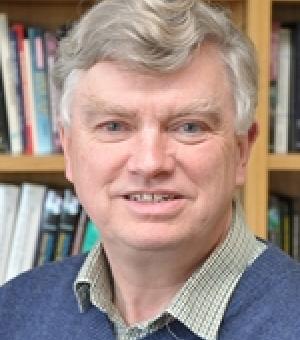
Professor Andrew Briggs

Professor of Nanomaterials
Director of the Quantum Information Processing IRC

Department of Materials
University of Oxford
Parks Road
Oxford OX1 3PH
UK

Tel: +44 1865 273725 (Room 195.30.05)
Tel: +44 1865 273700 (switchboard)
Fax: +44 1865 273730

[ Quicklinks: Research Summary Current Research Projects Recent Publications D.Phil. Projects Available ]

Summary of Research Interests

Director of Quantum Information Processing Interdisciplinary Research Collaboration

  • Holliday Prize, Institute of Materials, 1984
  • Metrology award for World Class Manufacturing, 1999
  • Honorary Fellow of Royal Microscopical Society, 2000

Current Research Projects

Synthesis and characterization of dimers for quantum entanglement
G. Liu, Dr. K. Porfyrakis, Dr. A.N. Khlobystov*, Dr. A. Ardavan**, Professor G.A.D. Briggs
The fabrication of asymmetric dimers of endohedral fullerenes containing nitrogen atoms will enable spin resonance experiments to be performed that demonstrate entanglement between electron spins. This will constitute a crucial proof of principle of controlled entanglement in carbon nanomaterials. Chemical synthesis routes will be used that preserve the delicate endohedral nitrogen species, including the use of metal atoms to join the fullerenes through metal coordination bonds or via functionalising groups. (*University of Nottingham; **Clarendon Laboratory, Department of Physics)

Molecules inside Nanotubes: a Synergistic Host-Guest System
Dr. A.N. Khlobystov*, Dr. K. Porfyrakis, Professor G.A.D. Briggs, Dr. A. Ardavan*, Professor R.J. Nicholas*
We are exploring interactions between carbon nanotubes and various organic and organometallic molecules, including fullerenes. These nanostructures demonstrate unique synergistic host-guest properties. Structural and dynamic behaviour of the encapsulated molecules is substantially affected by confinement in the nanotube and is mainly controlled by geometrical parameters of the host. Complementarily, the mechanical and electronic properties of the tubular host are influenced by the guest molecules due to the coupling between the molecular orbitals of the guest and the electronic bands of the nanotube. Host-guest systems of this type exhibit a range of functional properties which can be exploited in chemistry and nanotechnology. (*University of Nottingham; **Clarendon Laboratory, Department of Physics)

Zeptolitre Reaction Vessels
Dr. A.N. Khlobystov*, Dr. A. Ardavan**, Professor G.A.D. Briggs
We are studying chemical reactions inside single walled carbon nanotubes (SWNTs). We have been able to efficiently fill SWNTs with a variety of reactive molecules. These molecules can react inside SWNTs to form a polymer of fullerene oxide with improved topology over the bulk polymer. The use of single-walled carbon nanotubes as reaction vessels is recognized by the Guinness Book of World Records as the smallest test-tube. (*University of Nottingham; **Clarendon Laboratory, Department of Physics)

Manufacture of HPLC Columns for Separation of N@C60
Dr. A.N. Khlobystov*, Dr. K. Porfyrakis, Dr. A. Ardavan**, Professor G.A.D. Briggs
N@C60 and C60 are difficult to separate, as they have virtually indistinguishable affinities for most materials. We have targeted their most apparent difference, mainly that N@C60 is more polarizable than C60, to facilitate separation of the two molecules. We are designing materials that have exceptionally large polarizabilities and attaching them to silica for use as packing material for high performance liquid chromatography columns.(*University of Nottingham; **Clarendon Laboratory, Department of Physics)

Cluster-state quantum computing in quantum optics
Dr. S.C. Benjamin, Dr. D. Browne, Dr. B.W. Lovett, J. Fitzsimons, Professor G.A.D. Briggs
Cluster-state quantum computing is a recent alternative to circuit-based quantum computing. It seems particularly suited for physical implementations that offer only probabilistic gates, such as linear optical quantum computing. Recently, the cluster-state formalism was adopted to show how quantum computing can be implemented in isolated quantum systems with optical transitions. This project encompasses the theoretical study of creating cluster states efficiently, and the effects of physical noise on its quantum computing capability.

Dimers for quantum computing
Dr. K. Porfyrakis, Dr. A. Ardavan*, Professor G.A.D. Briggs
Electron spin active dimers could be used to realize a two-qubit system for quantum computing. We have synthesized directly bonded empty fullerene dimers by high speed vibration milling. The same method can be used to synthesize endohedral fullerene dimers to realize a two-qubit system. We are investigating the switchable dimers for a controllable two-qubit system. We are synthesizing azobenzene bridged nitroxyl free radical dimers and fullerene dimers. UV/Vis light can be used to switch the bridge from trans- to cis-, or vice verse, in order to control the qubit interaction, which can be probed by ESR method. (*Clarendon Laboratory, Department of Physics)

Controlled Entanglement of Fullerenes in Single Walled Nanotubes
S. Hu, Dr. A.A.R. Watt, Dr. A. Ardavan*, Professor G.A.D. Briggs
Single walled carbon nanotubes can carry electrons very long distances without disrupting the direction of magnetic moment. This project will investigate the communication between mobile electrons in a nanotube with static electrons, localized nearby, that might act as repositories of quantum information. For example, the static electrons might reside on other chemical species introduced inside the nanotube in a filling experiment. (*Clarendon Laboratory, Department of Physics)

Modelling supramolecular assembly on surfaces
Dr. V. Burlakov, Professor D.G. Pettifor, Professor J.H. Jefferson*, Professor G.A.D. Briggs
The aim of the project is to understand the formation and stability of hydrogen-bonded molecular networks on crystal surfaces. The key parameters are related to intermolecular binding energies, molecular adhesion to the surfaces, and commensurability of the network with the underlying lattice. Formation of the networks is being modelled using the kinetic Monte Carlo technique. The model parameters, such as molecular diffusion coefficients, are going to be calculated ab initio in collaboration with L. Kantorovich (King’s College, London), and compared with the experimental studies carried in the groups of P. Beton and N. Champness (Nottingham University). (*QinetiQ).(Funded by EPSRC).

Spin-active and optically-active carbon nanomaterials spin arrays
Dr. J.H. Warner, Dr. K. Porfyrakis, Dr. A.A.R. Watt, Dr. A. Ardavan*, Professor G.A.D. Briggs
Carbon nanomaterials offer discrete quantum states that are candidates for embodying quantum information. In this project will shall synthesise endohedral fullerene species, and potentially nanotubes, using arc discharge and other techniques. We shall isolate materials via HPLC and characterize them via a range of techniques. We shall insert fullerenes into carbon nanotubes to make one-dimensional spin chains. We shall develop physical chemistry for functionalized fullerenes and supramolecular carbon nanomaterials. We shall undertake chemical and structural characterization, using techniques such as UV-vis-NIR spectroscopy and photoluminescence and CW ESR, NMR and mass-spectroscopy, and electron microscopy. (*Department of Physics)

Pulsed electron spin resonance to demonstrate entanglement and spin propagation
Dr. L. Xiao, Dr. J.J.L. Morton, Dr. A. Ardavan*, Professor G.A.D. Briggs
A key component of quantum information processing is the ability to propagate information along spin chains. Several theoretical schemes have been proposed for doing this. We shall use pulsed electron spin resonance of arrays of electron spins to investigate the effects of interactions and propagation of information along a spin chain.(*Department of Physics)

Optically detected magnetic resonance for single qubit readout
Dr. G. Dantelle, Dr. A.A.R. Watt, Dr. J.J.L. Morton, Dr. K. Porfyrakis, Dr. A. Ardavan*, Professor G.A.D. Briggs
In any electron-spin based quantum computer you need to be able to read out a single electron spin. We shall investigate techniques of optically detected magnetic resonance (ODMR) in the search for spin-dependent optical transitions in carbon nanomaterials. We shall undertake advanced optical spectroscopy and photoluminescence of endohedral fullerenes and other molecules, combined with ESR to perform ODMR spectroscopy, with a view to developing a technique for optical measurement of a single spin.(*Department of Physics)

Experimental and theoretical electron energy loss studies of carbon nanostructures
Dr. R.J. Nicholls, Professor D.J.H. Cockayne, Professor A.I. Kirkland, Professor D.G. Pettifor, Professor G.A.D. Briggs
The local density of unoccupied electronic states is of vital importance in quantum nanotechnology. A combination of experimental electron energy loss spectroscopy and density functional and multiple scattering theories is an ideal way in which to study these states. We are using this combination of experiment and theory to probe the electronic structure of carbon nanomaterials. The aim is to better understand the interaction between a nanotube and endohedral fullerenes encapsulated inside it. (Partly funded by DSTL)

Logic Gates with Excitons and Spins in Quantum Dots
A. Kolli, E. Gauger, Dr. B.W. Lovett, Dr. S.C. Benjamin, Professor G.A.D. Briggs, Dr. J.M. Smith, Professor J. H. Jefferson
We have shown that excitons in self-assembled quantum dots are suitable candidates for use in quantum information processors. Based on this, we have proposed two methods for the ultra-fast manipulation of coupled dot states: one exploits the optical Stark effect to entangle excitonic states of two adjacent quantum dots, the other uses a single delocalised exciton to generate an effective coupling between spins localized on each dot. Both schemes may be generalized to perform arbitrary single- and two-qubit quantum logic gates. We now aim to apply our formalism to optically and spin active carbon based nanostructures, as well as to quantum dots placed inside optical micro-cavities. We are also investigating methods for performing the quantum gates adiabatically, since this may improve decoherence properties. (In collaboration with Hewlett Packard Laboratories Bristol and Griffith University, Brisbane, Australia)

Decoherence of Confined Excitonic States
Dr. B.W. Lovett, A. Kolli, E. Gauger, Dr. S.C. Benjamin, Professor G.A.D. Briggs
We are investigating the primary decoherence mechanisms by which quantum information is lost to its surroundings from confined excitonic states. The confinement might be due to a synthetic nanostructure such as a quantum dot, or to a molecular unit, such as a fullerene. The decoherence is caused by interactions with phonons or by emission of photons. We are using a variety of methods to study these effects, varying from simple Markovian master equations (in which the environment is assumed to have no memory), to more complex non-Markovian approaches, which use the spin-boson model. We are also looking at ways in which we can increase the coherence time of molecular devices; for example, this might be done by using tailored laser pulses to perform quantum manipulations, or by designing environments which do not support particles which interact most strongly with our quantum bits. (In collaboration with Hewlett Packard Laboratories Bristol)

Endohedral Fullerenes for Quantum Information Processing
Dr. J.J.L. Morton, Dr. K. Porfyrakis, Dr. A.M. Khlobystov*, Dr. A. Ardavan**, Professor G.A.D. Briggs
One of the most remarkably robust examples of an unpaired electron spin within a molecule is that of a nitrogen atom trapped inside a spherical fullerene (termed N@C60). We have measured the coherence time of a qubit encoded within this electron spin system and performed single qubit operations using pulsed electron paramagnetic resonance (EPR). We are investigating the synthesis of several types of endohedral fullerene dimers including directly-bonded and oxygen-bridged dimers. These multi-qubit systems will then be characterised by EPR. We shall study the ability to control qubit interactions through the inter-fullerene bridge, and move on to investigate larger qubit arrays. (*University of Nottingham; **Clarendon Laboratory, Department of Physics)

Optical and spin spectroscopy of carbon nanomaterials
R. Rahman, Dr. G. Dantelle, Dr. A. Ardavan*, Professor G.A.D. Briggs
In the quest for endohedral fullerene molecules that are both spin and optically active, it has been found that ErSc2N@C80 exhibits ESR and photoluminescence at around 1.5 &micron;. The aim of this project will be to extend such observations to other fullerene species, and to fullerenes in nanotubes, with a view to optical control of spin interactions and optical read out of spin states.(*Clarendon Laboratory, Department of Physics)

Electron spin resonance spectroscopy of fullerene materials
T. Poulianitis, E. Castro Camus, Dr. J.J.L. Morton, Dr. A. Ardavan*, Professor G.A.D. Briggs
Conventional ESR resonant cavities require typically more than 1012 electron spins to give adequate signal. We shall develop microwave stripline cavities that offer the potential for much higher sensitivity. These will be used to investigate coupling mechanisms and schemes in 2-D arrays of spin qubits on surfaces. The remarkable electron spin resonant (ESR) properties of endohedral fullerenes raise the question how stable and reproducible their energy levels can be. We shall investigate the properties of transitions in the ESR spectra of endohedral fullerenes, with a view to elucidating factors that affect their linewidth and variation. (*Clarendon Laboratory, Department of Physics)

Intramolecular propagation of electron spin states
R. Brown, Dr. J.J.L. Morton, Dr. A. Ardavan*, Professor G.A.D. Briggs
There is an intense worldwide search, spanning both academic and commercial sectors, to find a realistic route toward computing with molecular scale structures. The International Technology Roadmap for Semiconductors (public.itrs.net) recognises that conventional top-down technologies may have a limited remaining lifespan. It advocates a search for next generation technologies, recognising that molecular scale computation is an exceptionally promising prospect. It further highlights quantum information processing (QIP), the technology that would result from manipulating coherent superpositions of states, as having immense potential for certain applications. This project aims to create prototype elements for technologies of those classes. Through a variety of characterisation techniques, and pioneering synthetic chemistry, we shall develop the ability to engineer spin-spin interactions along a one-dimensional chain of spins. Recent high-profile theoretical studies have shown that such a spin chain would have highly remarkable properties. It would be capable of rapidly transferring the spin states, i.e. the information, along the chain purely by virtue of the spin-spin interactions without any externally applied voltage or power dissipation. Moreover it is even possible to generate multi-spin entanglement, the underlying resource for QIP, purely through the free evolution of such a chain. Thus a molecular device of this kind could constitute a key building block for any technology based on information processing with electron spins, especially QIP.(*Clarendon Laboratory, Department of Physics)

Synthesis and characterization of fullerenes in nanotubes for QIP
M. Zaka, Dr. J. Warner, Dr. A. Ardavan, Professor G.A.D. Briggs
Endohedral fullerenes can be inserted in single-walled carbon nanotubes to produce one-dimensional arrays that resemble peapods when seen in a high resolution transmission electron microscope (HRTEM). Factors affecting the interactions of endohedral fullerenes with single wall carbon nanotubes and other endohedral fullerenes in peapods will be studied using HRTEM. Major challenges include removing metallic catalyst particles and controlling defects in the nanotube. The project will investigate the purity and perfection of nanotubes processed in different ways, with a view to producing peapods of high electron spin quality for ensemble measurements and for device fabrication.

Electrically detected magnetic resonance and electron spin resonance in microwave stripline cavities, and development of methodology to control spin-spin interactions in arrays
Dr. R. George, Dr. J.J.L. Morton, Dr. A.A.R. Watt, Dr. A. Ardavan*, Professor G.A.D. Briggs
Electrically detected magnetic resonance (EDMR) offers a means to study the interaction of stationary electron spins with conduction electrons. We shall use electrical measurements of arrays of spin-active species to evaluate the interaction of transport electrons with static spins in EDMR. We shall create microwave resonant cavities in striplines to perform ESR on small numbers of electron spins in 1-, 2-, and 3-D arrays. We shall investigate the feasibility of extending this approach to single electron spin measurements.(*Department of Physics)

Theory and modelling of nanotubes and fullerenes for quantum information processing
L. Ge, Dr. B. Montanari*, Professor J.H. Jefferson**, Professor D.G. Pettifor, Professor G.A.D. Briggs
For the implementation of a quantum information processing (QIP) device, ab initio Hartree-Fock and density functional calculations are performed to predict the electronic structure, charge distribution, geometries, and energetics in nanotube-fullerene systems. These include charged C60, alkali metal fullerides, Sc@C82, La@C82, Y@C82 and nano peapods (i.e. single-wall carbon nanotubes containing fullerenes or endohedral fullerenes). The project is in collaboration with the Cambridge Hitachi Laboratory and the Cavendish Laboratory where the relevant QIP devices will be produced. The results will be used to parameterise correlated electron models to describe spin-qubit interactions in peapod structures (cf. the project of M Habgood et al.). (*CCLRC Rutherford Appleton Laboratory; **QinetiQ) (Funded by Oxford University Clarendon Scholarship and St Anne's College Scholarship)

Supramolecular structures for nanoelectronics and quantum computing
A. Shaw, Dr. M.R. Castell, Professor G.A.D. Briggs, Dr. A. Ardavan*, Dr. S.C. Benjamin, Dr. K. Porfyrakis
Conventional lithographic techniques for surface patterning have powered technological progress for decades and can now reach dimensions down to 20-30 nm. We shall pursue a fundamentally different approach to templating based on a 'bottom-up' nanotechnology in which nanoscale building blocks spontaneously adopt an ordered configuration through a self-assembly process. We shall use these templates to create structures suitable for nanoelectronics and quantum computing. The primary approach will be deposition of a passive molecular 'scaffolding' followed by subsequent deposition of a molecular species that forms an ordered distribution within that scaffolding. The species employed will be an endohedral fullerene with the property that the encapsulated atom can store information in the state of its nuclear and/or electron spin. In this way we shall create ordered arrays of quantum bits (qubits). Experiments will be designed to characterise the qubit-qubit intereactions, and the results will be used to guide further generations of nanoarray synthesis, with the ultimate goal of creating structures suitable for information processing. (*Department of Physics)

Metals in carbon cages for quantum nanotechnology
S.R. Plant, Dr. K. Porfyrakis, Dr. A.A.R. Watt, Dr. J.J.L. Morton, Dr. A. Ardavan*, Professor G.A.D. Briggs
Endohedral metallofullerenes incarcerate one or more metal atoms in a cage of (usually) 82 carbon atoms. Some of them are known to demonstrate high quality electron spin spectra, and we have recently been studying their photoluminescence spectra as a function of the excitation energy. The search is now on for metallofullerenes that exhibit coupled spin and optical properties as candidate materials for quantum nanotechnology. (*Department of Physics)

Modelling the formation of hydrogen-bonded molecular networks on crystalline surfaces
U. Weber, Dr. V. Burlakov, Professor D.G. Pettifor, Professor J.H. Jefferson*, Professor G.A.D. Briggs
The main objective is to develop a model suitable for simulation of hydrogen-bonded molecular networks on crystalline surfaces taking into account a mismatch between the crystal structures of the surfaces and the molecular network. An important part of the project is related to the development of environment-dependent potential describing hydrogen bonds between the network-forming molecules. This potential will then be used in kinetic MC simulations to guide experimental studies of the molecular networks and the structures suitable for QIP on different substrates. The potential parameters will be extracted using ab initio calculations performed in collaboration with L. Kantorovich (King’s College, London), and verified against experimental studies carried out in the groups of P. Beton and N. Champness (Nottingham University). (*QinetiQ).(Funded by EPSRC).

Towards Optical Readout of a Fullerene Quantum Computer
A. Tiwari, Dr. A.A.R. Watt, Dr. J.J.L. Morton, Dr. K. Porfyrakis, Dr. A. Ardavan*, Professor G.A.D. Briggs
We are developing materials and techniques to read out a spin qubit embodied in an endohedral fullerene spin state via optical means. We focus on magnetically and optically active fullerene species, and have demonstrated magnetic splitting of luminescence spectral lines from a candidate fullerene species, as well as direct optical interaction with an incarcerated ion. Combining these results with the results of pulsed electron paramagnetic resonance and pulsed optical spectroscopy, as well as theoretical studies of the quantum level structure, will develop a scheme to perform the readout. (*Department of Physics)

High fidelity operations on electron spin qubits
Dr. J.J.L. Morton, Dr. A. Tyryshkin**, Dr. A. Ardavan*, Professor S.A. Lyon**, Professor G.A.D. Briggs
An increasing number of quantum computing implementations are turning to electron spin as the embodiment of a quantum bit (qubit). The ability to measure and reduce systematic errors in electron spin rotations is therefore crucial when evaluating such quantum computing proposals. We have developed pulsed electron paramagnetic resonance (EPR) sequences that can be used to measure precisely even small systematic errors in rotations of electron-spin qubits. Using these sequences we hope to demonstrate the ability to substantially reduce these errors using composite pulse sequences, allowing high-fidelity qubit operations to be performed.(*Clarendon Laboratory, Oxford University; **Electrical Engineering Department, Princeton University)

Molecular Architectures Templated by DNA
Dr. A. Ardavan*, Dr. S.C. Benjamin, Professor G.A.D. Briggs, Dr. R. Goodman*, Dr.A.N. Khlobystov**, Dr. J. Malo*, Dr. A. Turberfield*
We aim to establish a technology capable of using self-assembling DNA scaffolding to create functional architectures of molecular-scale components with the potential to perform computation. In our preferred system quantum information will be embodied in electron spins on atoms doped within fullerene cages, which are attached to a DNA lattice by covalent bonding. (*Clarendon Laboratory, Department of Physics; **University of Nottingham)

27 public active projects

Research Publications

Modeling spin interactions in carbon peapods using a hybrid density functional theory. Phys. Rev. B 77, 235416 (2008); doi:10.1103/PhysRevB.77.235416. L. Ge, B. Montanari, J.H. Jefferson, D.G. Pettifor, N.M. Harrison and G.A.D. Briggs.

Role of interaction anisotropy in the formation and stability of molecular templates. Phys. Rev. Lett. 100, 156101 (2008); doi:10.1103/PhysRevLett.100.156101. U.K. Weber, V.M. Burlakov, L.M.A. Perdigao, R.H.J. Fawcett, P.H. Beton, N.R. Champness, J.H. Jefferson, G.A.D. Briggs and D.G. Pettifor. Selected for the April 15, 2008 issue of Virtual Journal of Biological Physics Research, www.vjbio.org.

Dynamics of paramagnetic metallofullerenes in carbon nanotube peapods. Nano Lett. 8, 1005-1010 (2008); doi:10.1021/nl0726104. J.H. Warner, A.A.R. Watt, L. Ge, K. Porfyrakis, T. Akachi, H. Okimoto, Y. Ito, A. Ardavan, B. Montinari, J.H. Jefferson, N.M. Harison, H. Shinohara and G.A.D. Briggs.

A chiral pinwheel supramolecular network driven by the assembly of PTCDI and melamine. Chem. Commun. 16, 1907-1909 (2008); doi:10.1039/b715658h. F. Silly, A.Q. Shaw, M.R. Castell and G.A.D. Briggs.

Role of interaction anisotropy in the formation and stability of molecular templates. Phys. Rev. Lett. 100, 156101 (2008); doi:10.1103/PhysRevLett.100.156101. U.K. Weber, V.M. Burlakov, L.M. A. Perdigão, R.H.J. Fawcett, P.H. Beton, N.R. Champness, J.H. Jefferson, G.A.D. Briggs and D.G. Pettifor. Selected for the April 28, 2008 issue of Virtual Journal of Nanoscale Science & Technology, www.vjnano.org.

Entanglement of static and flying qubits in degenerate mesoscopic systems. Phys. Rev. B 77, 075337 (2008); doi:10.1103/PhysRevB.77.075337. M. Habgood, J.H. Jefferson, A. Ramšak, D.G. Pettifor and G.A.D. Briggs.

Photoisomerization of a fullerene dimer. J. Phys. Chem. C 112, 2802-2804 (2008); doi:10.1021/jp711861z. J. Zhang, K. Porfyrakis, J.J.L. Morton, M.R. Sambrook, J. Harmer, L. Xiao, A. Ardavan and G.A.D. Briggs.

Epitaxial ordering of a perylenetetracarboxylic diimide-melamine supramolecular network driven by the Au(111)-(223) reconstruction. Appl. Phys. Lett. 92, 023102 (2008); doi:10.1063/1.2830828. F. Silly, A.Q. Shaw, G.A.D. Briggs and M.R. Castell.

Pairs and heptamers of C70 molecules ordered via PTCDI-melamine supramolecular networks. Appl. Phys. Lett. 91, 253109 (2007); doi:10.1063/1.2819682. F. Silly, A.Q. Shaw, K. Porfyrakis, G.A.D. Briggs and M. R. Castell.

Manipulation of quantum information in N@C60 using electron and nuclear paramagnetic resonance. phys. stat. sol. (b) 244, 3874-3878 (2007); doi:10.1002/pssb.20776192. A. Ardavan, J.J.L. Morton, S.C. Benjamin, K. Porfyrakys, G.A.D. Briggs, A. M. Tyryshkin and S.A. Lyon.

Synthesis of fullerene dimers with controllable length. phys. stat. sol. (b) 244, 3849-3852 (2007); doi:10.1002/pssb.20776131. K. Porfyrakys, M.R. Sambrook, T.J. Hingston, J. Zhang, A. Ardavan and G.A.D. Briggs.

Physics and faith are worth debating. Physics World 20 (12), 23 (December 2007). G.A.D. Briggs, G.B. Dalton, P. Ewart, A.M. Steane, J.S. Wark and W.D. Phillips. § 466. Configuration-selective spectroscopic studies of Er3+ centers in ErSc2N@C80 and Er2ScN@C80. J. Chem. Phys. 127, 194504 (2007); doi:10.1063/1.2805083. A. Tiwari, G. Dantelle, K. Porfyrakis, R.A. Taylor, A.A.R. Watt, A. Ardavan and G.A.D. Briggs. Selected for the December 3, 2007 issue of Virtual Journal of Nanoscale Science & Technology, www.vjnano.org.

Optical studies of non-linear absorption in single InGaN/GaN quantum dots. A.F. Physics of Semiconductors, AIP Conference Proceedings 893, 953-954 (2007). A.F. Jarjour, R.A. Taylor, R.W. Martin, I.M. Watson, R.A. Oliver, G.A.D. Briggs, M.J. Kappers and C.J. Humphreys.

Self-assembly of trimetallic nitride template fullerenes on surfaces studied by STM. Surf. Sci. 601, 2750-2755 (2007). D.F. Leigh, C. Nörenberg, D. Cattaneo, J.H.G. Owen, K. Porfyrakis, A. Li Bassi, A. Ardavan, G.A.D. Briggs.

Toward controlled spacing in one-dimensional molecular chains: alkyl-chain-functionalized fullerenes in carbon nanotubes. J. Am. Chem. Soc. 129, 8609-8614 (2007). T.W. Chamberlain, A. Camenisch, N.R. Champness, G.A.D. Briggs, S.C. Benjamin, A. Ardavan and A.N. Khlobystov.

Environmental effects on electron spin relaxation in N@C60. Phys. Rev. B 76, 085418 (2007); doi:10.1103/PhysRevB.76.085418. J.J.L. Morton, A. M. Tyryshkin, A. Ardavan K. Porfyrakis, S.A. Lyon and G.A.D. Briggs.

Photoluminescence properties of a single GaN nanorod with GaN/AlGaN multi-layer quantum discs. Appl. Phys. Lett. 90, 101901 (2007); doi:10.1063/1.2712772. S.N. Yi, J.H. Na, K.H. Lee, A.F. Jarjour, R.A. Taylor, Y.S. Park, T.W. Kang, S. Kim, D.H. Ha and G.A.D. Briggs.

Diameter-dependent elastic modulus supports the metastable-catalyst growth of carbon nanotubes. Nano Letters 7, 1598-1602 (2007); dx.doi.org/10.1021/nl070502b. K.M. Lee, B. Lukić, A. Magrez, J.W. Seo, G.A.D. Briggs, A.J. Kulik and L. Forró.

Optical studies of non-linear absorption in single InGaN/GaN quantum dots. Physics of Semiconductors 893, 953-954 (2007). A.F. Jarjour, R.A. Taylor, R.W. Martin, I.M. Watson, R.A. Oliver, G.A.D. Briggs, M.J. Kappers and C.J. Humphreys.

Efficient dynamic nuclear polarization at high magnetic fields. Phys. Rev. Lett. 98, 220501 (2007); quant-ph/0611276. G.W. Morley, J. van Tol, A. Ardavan, K. Porfyrakis, J. Zhang and G.A.D. Briggs.

The scale and spin of life in the little league. Small edited by P. Gölitz and E. Levy. The Times Higher Education Supplement 1794, 20 (18 May 2007). G.A.D. Briggs. §

Correlation between photoconductivity in nanocrystalline titania and short circuit current transients in MEH-PPV/titania solar cells. Nanotechnology 18, 145708 (2007); doi:10.1088/0957-4484/18/14/145708. Z.B. Xie, B.M. Henry, K.R. Kirov, D.A.R. Barkhouse, V.M. Burlakov, H.E. Smith, C.R.M. Grovenor, H.E. Assender, G.A.D. Briggs, M. Kano and Y. Tsukahara.

Equilibrium distributions and the nanostructure diagram for epitaxial quantum dots. J Comput. Theor. Nanosci. 4, 335-347 (2007); doi:10.1166/jctn.2007.019. R.E. Rudd, G.A.D. Briggs, A.P. Sutton, G. Medeiros-Ribeiro and R.S. Williams.

The effects of a pyrrolidine functional group on the magnetic properties of N@C60. Chem. Phys. Lett. 432, 523-527 (2006). J. Zhang, J.J.L. Morton, M.R. Sambrook, K. Porfyrakis, A. Ardavan and G.A.D. Briggs.

Synthesis of an asymmetric fullerene dimer via sequential cycloadditions. Tetrahedron Lett. 47, 8595–8597 (2006); doi:10.1016/j.tetlet.2006.09.119. T.J. Hingston, M.R. Sambrook, N.H. Rees, K. Porfyrakys and G.A.D. Briggs.

Synthesis of a short-chain fullerene dimer. Tetrahedron Lett. 47, 7413-7415 (2006); doi:10.1016/j.tetlet.2006.08.061. T.J. Hingston, M.R. Sambrook, K. Porfyrakys and G.A.D. Briggs.

PL, magneto-PL and PLE of the trimetallic nitride template fullerene Er3N@C80. phys. stat. sol. (b) 243, 3037-3041 (2006). M.A.G. Jones, J.J.L. Morton, K. Porfyrakis, G.A.D. Briggs, R.A. Taylor and A. Ardavan.

The N@C60 nuclear spin qubit: Bang-bang decoupling and ultra-fast phase gates. phys. stat. sol. (b) 243, 3028-3031 (2006). J.J.L. Morton, A.M. Tyryshkin, A. Ardavan, S.C. Benjamin, K. Porfyrakis, S.A. Lyon and G.A.D. Briggs.

Determination of the thermal stability of the fullerene dimers C120, C120O and C120O2. J. Phys. Chem. B 110, 16979-16981 (2006). J.Y. Zhang, K. Porfyrakis, M.R. Sambrook, A. Ardavan and G.A.D. Briggs.

Direct optical excitation of a fullerene-incarcerated metal ion. Chem. Phys. Lett. 428, 303-306 (2006). M.A.G. Jones, R.A. Taylor, A. Ardavan, K. Porfyrakis and G.A.D. Briggs.

Encapsulation and IR probing of a cube-shaped octasilasesquioxane H8Si8O12 within carbon nanotubes. Angewandte Chemie – International Edition 45, 5188-5191 (2006); doi:10.1002/anie.200504273. J. Wang, M.K. Kuimova, M. Poliakoff, G.A.D. Briggs and A.N. Khlobystov.

Study of the effect of changing the microstructure of titania layers on composite solar cell performance. Thin Solid Films 511, 523-528 (2006); doi:10.1016/j.tsf.2005.12.016. Z. Xie, B.M. Henry, K.R. Kirov, H.E. Smith, A. Barkhouse, C.R.M. Grovenor, H.E. Assender, G.A.D. Briggs, G.R. Webster, P.L. Burn, M. Kano and Y. Tsukahara.

Two-photon absorption from single InGaN/GaN quantum dots. Physica E 32, 119-122 (2006). A.F. Jajour, A.M. Green, T.J. Parker, R.A. Taylor, R.A. Oliver, G.A.D. Briggs, M.J. Kappers, C.J. Humphreys. R.W. Martin and I.M. Watson.

Atomic-molecular superlattices. Chem. Commun. 18, 1944-1946 (2006). A.A.R. Watt, M.R. Sambrook, K. Porfyrakis, B.W. Lovett, H. El Mkami, G.M. Smith and G.A.D. Briggs.

Registration of single quantum dots using cryogenic laser photolithography. Appl. Phys. Lett. 88, 193106 (2006). K.H. Lee, A.M. Green, R.A. Taylor, D.N. Sharp, J. Scrimgeour, O.M. Roche, J.H. Na, A.F. Jarjour, A.J. Turberfield, F.S.F. Brossard, D.A. Williams and G.A.D. Briggs. Selected for the May 2006 issue of Virtual Journal of Quantum Information.

Towards a fullerene-based quantum computer. J. Phys.: Condens. Matter 18, S867-S883 (2006); doi:10.1088/0953-8984/18/21/S11, quant-ph/0511198. S.C. Benjamin, A. Ardavan, G.A.D. Briggs, D.A. Britz, D. Gunlycke, J.H. Jefferson, M.A.G. Jones, D.F. Leigh, B.W. Lovett, A.N. Khlobystov, S. Lyon, J.J.L. Morton, K. Porfyrakis, M.R. Sambrook and A.M. Tyryshkin.

Entanglement between static and flying qubits in a semiconducting carbon nanotube. J. Phys.: Condens. Matter 18, S851-S866 (2006); doi:10.1088/0953-8984/18/21/S11, cond-mat/0511126. D. Gunlycke, T. Rejec, J.H. Jefferson, A. Ramšak, D.G. Pettifor and G.A.D. Briggs.

Zener resonant tunneling action in carbon nanotubes. J. Phys.: Condens. Matter 18, S843-S849 (2006); doi:10.1088/0953-8984/18/21/S10, cond-mat/0412406. D. Gunlycke, J.H. Jefferson, S.W.D. Bailey, C.J. Lambert, D.G. Pettifor and G.A.D. Briggs.

Coherence of spin qubits in silicon. J. Phys.: Condens. Matter 18, S783-S794 (2006); doi:10.1088/0953-8984/18/21/S06, cond-mat/0512705. A. M. Tyryshkin, J.J.L. Morton, S.C. Benjamin, A. Ardavan, G.A.D. Briggs, J.W. Ager, and S. A. Lyon. Chosen for inclusion in the Journal of Physics: Condensed Matter (JPCM) Top Papers of 2006.

Quantum information processing. J. Phys.: Condens. Matter 18 (2006); doi:10.1088/0953-8984/18/21/E01. G.A.D. Briggs, D. Ferry and A.M. Stoneham.

Synthesis and reactivity of N@C60O. Phys. Chem. Chem. Phys. 2006, 2083-2088 (2006); doi:10.1039. M.A.G. Jones, D.A. Britz, J.J.L. Morton, A.N. Khlobystov, K. Porfyrakis, A. Ardavan and G.A.D. Briggs.

Cryogenic two-photon laser photolithography with SU-8. Appl. Phys. Lett. 88, 143123 (2006). K.H. Lee, A.M. Green, R.A. Taylor, D.N. Sharp, A.J. Turberfield, F.S.F. Brossard, D.A. Williams and G.A.D. Briggs.

Intensity-dependent relaxation of photoconductivity in nanocrystalline titania thin films. Phys. Rev. B 73, 113317 (2006). Z. Xie, V.M. Burlakov, B.M. Henry, K.R. Kirov, H.E. Smith, C.R.M. Grovenor, H.E. Assender, G.A.D. Briggs, M. Kano and Y. Tsukahara.

Bandgap modulation of narrow-gap carbon nanotubes in a transverse electric field. Europhys. Lett. 73, 759-764 (2006), cond-mat/0510480. D. Gunlycke, C.J. Lambert, S.W.D. Bailey, D.G. Pettifor, G.A.D. Briggs and J.H. Jefferson.

Quantum computers using atoms in carbon buckeyballs. The Ship (St Anne’s College Record 2005-2006) 13-14. G.A.D. Briggs and B.W. Lovett.

Bang-bang control of fullerene qubits using ultra-fast phase gates. Nature Physics 2, 40-43 (2006), quant-ph/0601008. J.J.L. Morton, A.M. Tyryshkin, A. Ardavan, S.C. Benjamin, K. Porfyrakis, S.A. Lyon and G.A.D. Briggs.

Electron spin relaxation of N@C60 in CS2. J. Chem. Phys. 124, 014508 (2006), cond-mat/0510610. J.J.L. Morton, A.M. Tyryshkin, A. Ardavan, K. Porfyrakis, S.A. Lyon and G.A.D. Briggs.

Long list of publications

Projects Available

Endohedral metallofullerenes for nanotechnological applications
K Porfyrakis / G A D Briggs

Fullerenes are fascinating carbon-based materials. Their most interesting feature is that due to their cage-like structure they can trap atom(s) inside their empty "shell". This project explores the synthesis and chemical functionalization of endohedral metallofullerenes: Mn@Cm (where n=1-3 and m ≥ 60).
We shall synthesise novel endohedral metallofullerenes using a new arc-discharge facility. We shall customise the fullerene molecular structure in order to tune their properties, such as their HOMO-LUMO gap. We shall develop methods for the covalent functionalization of endohedral metallofullerenes. We shall investigate the effect of rigid or flexible functional groups on the electronic properties of the endohedral species. We shall focus on malonate and pyrrolidine adducts initially, but other schemes will also be considered. Endohedral metallofullerenes and their derivatives will be purified by high-performance liquid chromatography (HPLC) and will be characterized by various spectroscopic techniques available to us, including mass spectrometry, UV-Vis-NIR and FTIR spectroscopies and other analytical tools.
These nanomaterials are of interest for quantum information processing, but are also attractive for opto-electronics and photovoltaic applications.

Also see homepages:Andrew Briggs Kyriakos Porfyrakis

Nanomaterials for quantum information processing
G A D Briggs / Dr A Ardavan (Department of Physics) / J J L Morton / K Porfyrakis / J H Warner

Quantum information processing offers one of the most exciting challenges in the study and development of nanomaterials. It is at the cutting edge of quantum nanoelectronics, and we are part of the world wide race to develop a scalable quantum computer. We need materials with quantum states that can be individually controlled and measured, and yet which are sufficiently robust against decoherence that they can sustain a sequence of quantum manipulations and interactions. We lead the world in using the new family of fullerene materials (popularly known as Bucky balls), which can be used to contain atomic and molecular species inside a cage that separates them from the quantum environment. We can insert fullerenes into carbon nanotubes to create one-dimensional 'peapod' arrays, which we can image by HRTEM, and we are also developing other schemes for molecular self-assembly of fullerenes and other functional molecules. We can also use other materials such as doped silicon and diamond. We can store the quantum information in electron or nuclear spin, and exchange it between the two. We can manipulate and characterize the spin states by electron paramagnetic resonance and also optically. By creating entanglement between several spins, it will be possible to develop sensors that exceed the standard quantum limit. By storing information holographically in collective spin states, it will be possible to process quantum information in large ensembles of spins. There will be several projects with these nanomaterials, ranging from synthesis and characterization to experimental implementation of candidate schemes for quantum computing. The research is highly interdisciplinary, and there is scope for a range of skills and interests from materials science and chemistry to experimental quantum physics (qsd.materials.ox.ac.uk). In association with the experimental programme which will take place within a large and active research group (www.qipirc.org), there will be theory and modelling projects with Dr S C Benjamin, Dr J Fitzsimons, Dr B W Lovett and Professor J H Jefferson (www.qunat.org). There may be possibilities for industrial support and for international travel and collaboration.

Also see homepages:Andrew Briggs John Morton Kyriakos Porfyrakis Jamie Warner

High Resolution Electron Nanometrology of Nanowire Devices
G A D Briggs / Dr J Luo / J H Warner / A Watt

This project will develop techniques for in situ scanning tunneling microscopy (STM) inside a high resolution transmission electron microscope (HRTEM). The STM will be used to probe in situ electronic properties and relate these directly to atomic physicochemical structure using HRTEM. This approach will be used to study the family of carbon nanomaterials, such as nanotubes and fullerenes, which show promise for emerging quantum technologies

Also see homepages:Andrew Briggs Jamie Warner Andrew Watt

Also see a full listing of New projects available within the Department of Materials.