


Personal Homepages
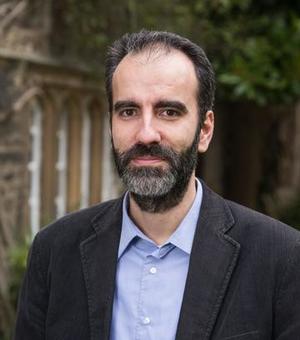
![]() | Dr Sergio Lozano-Perez |
Summary of Interests
1. Understanding the mechanisms controlling the initiation and propagation of Stress Corrosion Cracks in steels from nuclear reactors
2. Characterization of ODS steels for fusion reactors
3. Application of Multivariate Statistical Analysis to Microanalysis
4. Improving the acquisition and processing of analytical data: EFTEM, EELS-SI and EDX-SI
Current Research Projects
Multi-scale characterization of stress corrosion cracking
Dr. S. Lozano-Perez, K. Kruska, Dr. D. Saxey, Professor G.D.W. Smith, Dr. T. Yamada*, Dr. T. Terachi*
An innovative multi-technique approach which involves 3D atom-probe, NanoSIMS, High-resolution analytical (S)TEM, EBSD and electron tomography is being used to understand the mechanisms governing crack initiation and crack propagation in austenitic stainless steels from nuclear reactors. Funded by INSS (Japan)*
Modelling and quantitative interpretation of electron energy-loss spectra using novel density functional theory methods
Dr. R. Nicholls, Professor P.D. Nellist, Dr. J.R. Yates, Dr. S. Lozano-Perez, Professor N. Grobert, Professor C.R.M. Grovenor, Professor D. McComb*
The research proposed here aims to further our ability to use electron energy-loss spectra to solve real problems in Materials Science by developing new computer modelling methods and by using these methods to study real-world materials problems. Funded by EPSRC.
Atomic scale characterization of ODS steels
Dr. V. de Castro, Dr. S. Lozano-Perez
ODS FeCr steels have been chosen as blanket materials for the new ITER experimental fusion reactor. Their optimum mechanical and corrosion behaviour relies on a fine dispersion of Y2O3 precipitates which is challenging to characterize. Cs-corrected EFTEM and 3D atom-probe have been used successfully to detect and analyze precipitates as small as 1nm in diameter.
Quantitative interpretation of aberration-corrected STEM data for the analysis of core-shell nanoparticles
Dr. P.D. Nellist, Dr. S. Lozano-Perez, H. E, Dr. D. Ozkaya*
The development of aberration-correctors for the STEM has led to a dramatic improvement in lateral spatial resolution. Both annular dark-field imaging and spectroscopic methods such as EDX and EELS can provide chemical information at spatial resolutions up to the atomic. We are developing and applying sophisticated methods to quantitatively analysis the data, and applying it to measure segregation and alloying in core-shell bimetallic nanoparticles. Funded by EPSRC and Johnson-Matthey*.
MINTWELD: Modelling of interface evolution in advanced welding
Dr. S. Lozano-Perez, Professor A. Cocks, Dr. Hiroto Kitaguchi
High-resolution analytical (S)TEM and 3D atom-probe will be used to validate the results obtained from modelling at different scales of interface microstructure evolution during welding. Sponsored by the EU FP7.
Oxidation and hydriding mechanisms in Zr nuclear fuel cladding alloys
S. Yardley, Dr. S. Lozano-Perez, Professor J.M. Sykes, Professor C. English, Professor G.D.W. Smith FRS, Professor Chris Grovenor
The critical mechanisms that lead to breakaway oxidation behaviour and delayed nydride cracking in commercial Zr alloys in reactor environments are poorly understood, and yet they are very important in controlling the safe operating lifetime of reactor fuel rods and so the fuel burnup that can be achieved. This project is using the latest generation of advanced analytical tools to study the structure and chemistry of the oxide and the oxide/metal interface at the atomic scale in order to understand how the oxidation and hydridation process might be controlled by better design of the cladding alloy. Funded by EPSRC grants EP/E036384 and EP/I003274 with support from Rolls Royce, Westinghouse and EDF, and in collaboration with the University of Manchester and the Open University.
Radiation damage and precipitation in nuclear steels
J. Lim, Dr. S. Lozano-Perez, Prof. C. Grovenor
Understanding the effect of prolonged radiation exposure on the mechanical properties of pressure vessel steels is important for supporting the safety case for lifetime extension of existing nuclear power plant. TEM studies of microstucture changes with fluence in real in-reactor surveillance samples is the focus of this project, which is part of the EU collaboration LONGLIFE involving 16 European partners.
NanoSIMS analysis of grain boundary segregation
H. Ayuni, Dr. S. Lozano-Perez, Prof. C.R.M. Grovenor, Dr. M. Green*, Prof. F Christien**
High resolution SIMS analysis allows the analysis of grain segregation profiles to a statistically significant number of grain boundaries in bulk samples. This project will explore the application of this technique to both model alloys (Ni-P) and commercial B-containing steels. Supported by a Malaysian Government scholarship. *Tata Steel ** University of Nantes
Radiation damage mechanisms in Nuclear Materials
A. London, Dr. S. Lozano-Perez, Prof. C. Grovenor
Radiation damage is a major degradation mechanism in materials in nuclear reactors, affecting both the mechanical properties and the rate of chemical reactions. This project uses state-of-the-art analytical techniques to study radiation damage mechanisms in commercial steel and zirconium alloys. Funded by the Black Family Scholarship and by EPSRC grant EP/I003274 with support from Rolls Royce and Westinghouse.
9 public active projects
Research Publications
Projects Available
***4 studentships in nuclear materials
C.R.M. Grovenor / S. Lozano-Perez / P. Bagot / P. Edmondson
The Oxford Materials Department has established a major research effort in nuclear materials with funding from the Engineering and Physical Sciences Research Council and a number of global industrial partners. These new studentships are all externally funded and will offer the successful candidates the opportunity to join a very active team of 4 academic staff, 7 postdoctoral researchers and more than 20 students working on different aspects of materials design and materials degradation mechanisms critical to the nuclear industry, and to work closely with the funding companies.
***Studentships 1 and 2. Atomic scale mechanisms of hydrogen pick up in nuclear fuel cladding
C.R.M. Grovenor/S. Lozano-Perez/P. Bagot/B. Comstock (Westinghouse)
These 2 studentships are part of a large international project on the mechanisms of hydrogen pick up in zirconium fuel cladding alloys, involving researchers and industrial partners in the USA, France, Sweden and the UK. The detrimental impact of hydrogen on the performance of nuclear fuel is a serious issue for the efficient use of nuclear fuel in high burn-up applications. Understanding the mechanism of hydrogen pickup will provide a scientific basis for designing improved alloys. Working on the same samples, the first studentship will concentrate on chemical analysis at the atom scale by state-of-the-art Atom Probe Tomography, and the second will work on transmission electron microscopy and high resolution SIMS analysis. There will also be opportunities for undertaking experiments with the project partners, and spending time in their laboratories.
*Studentship 3. Stability of Bubble Lattices in irradiated materials
C.R.M. Grovenor /S. Lozano-Perez/P. Edmondson
During the irradiation of nuclear reactor components in service, small voids or bubbles can be created that degrade the mechanical properties. However, under certain conditions these bubbles can form stable lattices that are much less damaging to the macroscopic properties, and can allow the materials to have a much longer service life. This project will use transmission electron microscopy and ion irradiation techniques to define in a range of nuclear alloys the dose, flux and temperature conditions under which stable bubble lattices can be developed using implanted ions to mimic neutron irradiation.
This project is only available to a citizen of the United Kingdom.
***Studentship 4. Atom Probe Tomography studies of longterm ageing of nuclear pressure vessel steels
C.R.M. Grovenor /P. Bagot/ K. Wilford (Rolls Royce)
The Materials Department has a longstanding research partnership with Rolls Royce on the atomic scale changes of microstructure that occur in nuclear steels during thermal ageing which is intended to provide mechanistic understanding of similar changes during neutron irradiation. These microstructural changes can strongly influence the mechanical properties of the steels and have implications on the service life of nuclear components. This project will use state-of-the-art atom probe tomography techniques to study the precipitation processes in a unique set of nuclear steels thermally aged for more than 10 years, and there will be opportunity during the project for strong interaction with the sponsoring company.
These 3.5 year studentships will provide full fees and maintenance for a citizen of the UK or EU (the stipend is expected to be £15,500 per year, tax free). Funding is available to all applicants, but the fees are covered only at the home/EU rate. Therefore, overseas students would have to provide the difference between home/EU and overseas student fees from some other source such as a scholarship or personal funds. For students who commence their studies in October 2012 this difference is expected to be in the region of £40,000 over three years. Please see http://www.ox.ac.uk/admissions/postgraduate_courses /finance/index.html for a statement of the actual fees.
Any questions concerning the project can be addressed to Professor Chris Grovenor (chris.grovenor@materials.ox.ac.uk). General enquiries on how to apply can be made by e mail to graduate.studies@materials.ox.ac.uk. You must complete the standard Oxford University Application for Graduate Studies and further information and an electronic copy of the application form can be found at http://www.ox.ac.uk/admissions/postgraduate_courses/apply/index.html
Also see homepages: Paul Bagot Chris Grovenor Sergio Lozano-Perez
Also see a full listing of New projects available within the Department of Materials.


